
Have you ever noticed that you seem to trim your fingernails much more often than your toenails? It’s a common observation, yet many people don’t know the reason behind it. While both fingernails and toenails are made from the same protein and grow through the same biological process, they don’t grow at the same speed.
The difference mainly comes down to blood circulation, daily use, and how your body delivers nutrients to growing nail cells. Understanding why do fingernails grow faster than toenails can also help you learn more about your overall nail health and the factors that influence healthy growth.
How Humans Nails Grow
Before comparing fingernails and toenails, it’s helpful to understand how nails actually grow.
Every nail begins in an area called the nail matrix, which sits beneath the skin at the base of the nail. This is where new nail cells are continuously produced. These cells are filled with keratin, a strong protein that also forms your hair and the outer layer of your skin.
As fresh cells develop inside the nail matrix, they push older cells forward. The older cells harden and become the visible nail plate. Since nails grow from the base rather than the tip, healthy cell production inside the matrix is essential for steady nail growth.
Why Fingernails Grow Faster Than Toenails
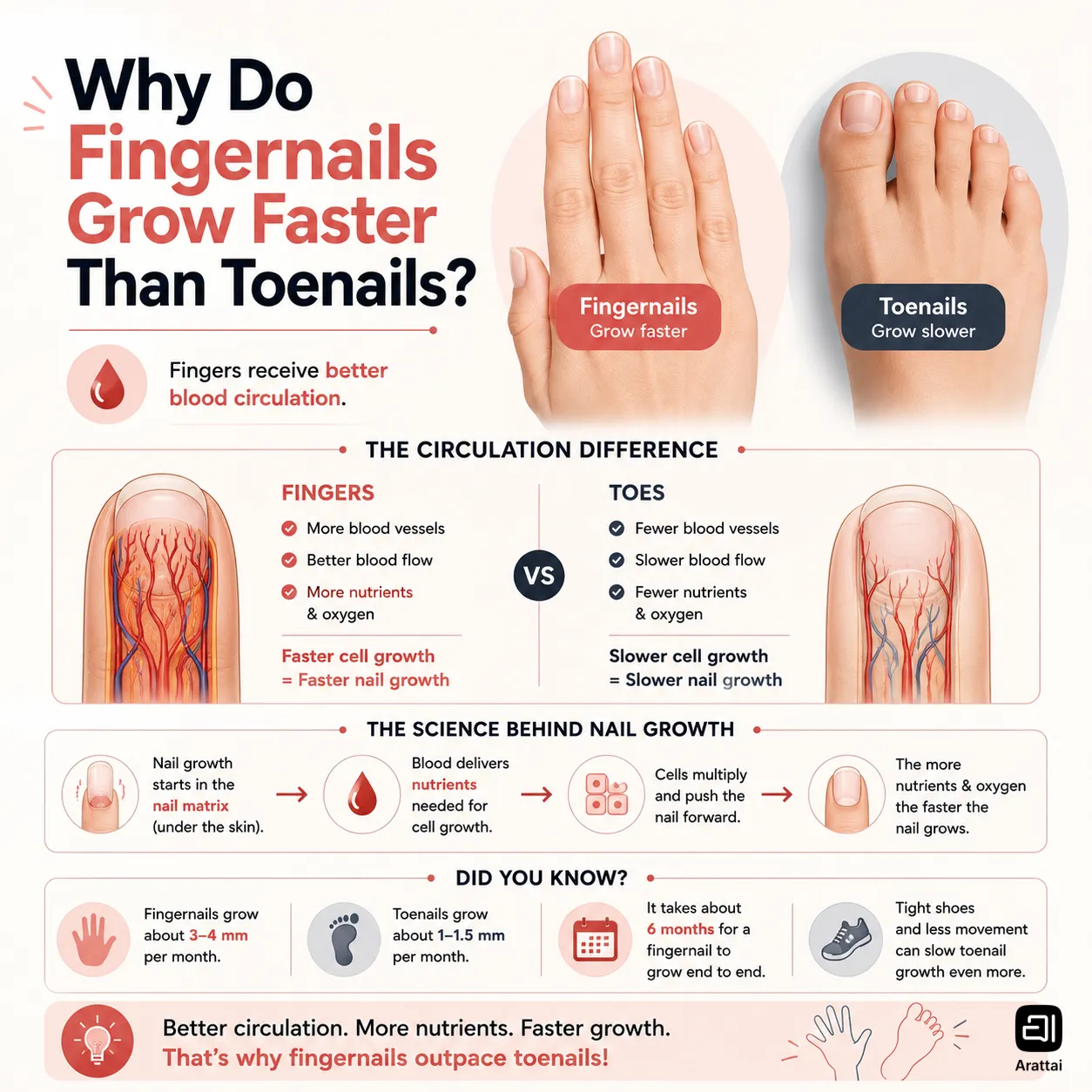
The biggest reason fingernails grow faster than toenails is that your fingers generally receive better blood circulation.
Blood carries oxygen and essential nutrients that growing cells need to divide and multiply. Fingertips have a rich network of tiny blood vessels, allowing the nail matrix to receive a steady supply of these nutrients. As a result, the cells responsible for nail growth divide more quickly, causing fingernails to grow faster.
Daily hand movement may also play a role. Your hands are constantly typing, writing, cooking, cleaning, and performing countless other tasks. This frequent movement may slightly increase blood flow to the fingers, supporting healthy nail growth.
In contrast, your toes experience less movement throughout the day and naturally receive lower blood circulation than your fingers. Because the nail matrix receives fewer nutrients and oxygen, cell production occurs more slowly, resulting in slower nail growth.
ALSO READ: Hydrogen Peroxide for Toenail Fungus
Why Toenails Grow More Slowly
Toenails grow through the same biological process, but several factors can slow them down.
First, the feet are farther from the heart, which means blood reaches them with slightly less efficiency than the hands. While circulation remains healthy in most people, the reduced blood flow compared with the fingers contributes to slower nail growth.
Footwear can also have an impact. Wearing tight or poorly fitting shoes places constant pressure on the toes, which may reduce stimulation of the nail matrix and contribute to slower growth over time.
Toenails are also generally thicker than fingernails, making their growth appear even slower. Combined with lower daily movement and slower cell turnover, these factors explain why toenails usually take much longer to grow.
Other Factors That Affect Nail Growth
Although blood circulation plays a major role, several other factors influence how quickly your nails grow.
Age is one of the most important. Nail growth tends to slow naturally as people get older because cell renewal becomes less active.
Nutrition also matters. Since nails are primarily made of keratin, your body needs enough protein to produce healthy nails. Iron, zinc, biotin, and other vitamins and minerals also support normal nail growth, particularly if a person has a nutritional deficiency.
Hydration helps maintain flexible, healthy nails, while certain hormonal changes, such as pregnancy, may temporarily increase nail growth.
Seasonal changes can also make a difference. Many people notice their nails grow slightly faster during warmer months. Scientists believe increased blood circulation and greater physical activity during summer may contribute to this effect.
Finally, some medical conditions, medications, and circulation problems can slow nail growth. If your nails suddenly stop growing or develop significant changes in color, thickness, or shape, it’s a good idea to speak with a healthcare professional.
How Fast Do Nails Normally Grow?
Healthy fingernails typically grow about 3–4 mm per month, while toenails grow more slowly at around 1–1.5 mm per month. Individual growth rates vary depending on age, health, and other factors. These findings are supported by a clinical study published in the Journal of the European Academy of Dermatology and Venereology .
Because of this difference, a fingernail usually takes about six months to grow from the base to the tip. A toenail, however, can take 12 to 18 months to completely replace itself.
Can You Make Nails Grow Faster?
There is no proven way to dramatically speed up nail growth, but you can create the best conditions for healthy nails.
A balanced diet rich in protein, fruits, vegetables, whole grains, iron, and zinc supports the nail matrix. Staying hydrated, moisturizing your nails and cuticles, and protecting your hands from harsh chemicals can also help keep nails strong.
Avoid biting your nails or picking at your cuticles, as these habits may damage the nail matrix and interfere with healthy growth.
If you suspect a vitamin deficiency or an underlying medical condition, consult a healthcare provider before taking supplements. While biotin may help some people with brittle nails, it is not a guaranteed way to make nails grow faster.
The Real Root Cause of Toenail Fungus Has Nothing to Do With Hygiene (Watch)
If you’ve tried creams, pills, and home remedies without success, scientists have discovered a mutated “super-fungus” that requires a completely different approach.

Top dermatologists are urging anyone dealing with yellow, brittle, or foul-smelling nails to stop scraping them immediately. A groundbreaking natural oil formula has been proven to penetrate deep into the nail bed, eliminating the fungus at its core while restoring flawless skin.
Frequently Asked Questions
-
Why do fingernails grow faster than toenails?
Fingernails receive better blood circulation, allowing the nail matrix to get more oxygen and nutrients for faster cell production.
-
Do nails grow faster in summer?
Yes. Many people experience slightly faster nail growth during warmer months, possibly due to improved circulation and increased physical activity.
-
Does cutting nails make them grow faster?
No. Trimming your nails does not affect how quickly they grow. Nail growth is controlled by the nail matrix beneath the skin.
-
Why does one fingernail grow faster than another?
Growth rates can vary depending on blood flow, hand dominance, minor injuries, and natural differences between fingers.
-
Do vitamins help nails grow?
Vitamins and minerals support healthy nail growth if you have a deficiency. However, taking extra supplements without a medical need usually won’t make nails grow significantly faster.
Conclusion
Although fingernails and toenails are made from the same material and grow through the same process, they don’t grow at the same pace. Better blood circulation, greater daily hand movement, and a richer supply of oxygen and nutrients allow fingernails to outgrow toenails. Meanwhile, reduced circulation, thicker nails, and constant footwear pressure contribute to the slower growth of toenails.
The best way to support healthy nail growth isn’t to search for quick fixes but to focus on good nutrition, proper nail care, and overall health. Trusted organizations such as the American Academy of Dermatology, Cleveland Clinic, Mayo Clinic, and the National Institutes of Health also emphasize that healthy nails are often a reflection of a healthy body.
References
- Yaemsiri S, Hou N, Slining MM, He K. Growth rate of human fingernails and toenails in healthy American young adults. Journal of the European Academy of Dermatology and Venereology. 2010;24(4):420–423. PMID: 19744178. PubMed: Growth rate of human fingernails and toenails in healthy American young adults (PMID: 19744178)
- Nail Anatomy wiki