
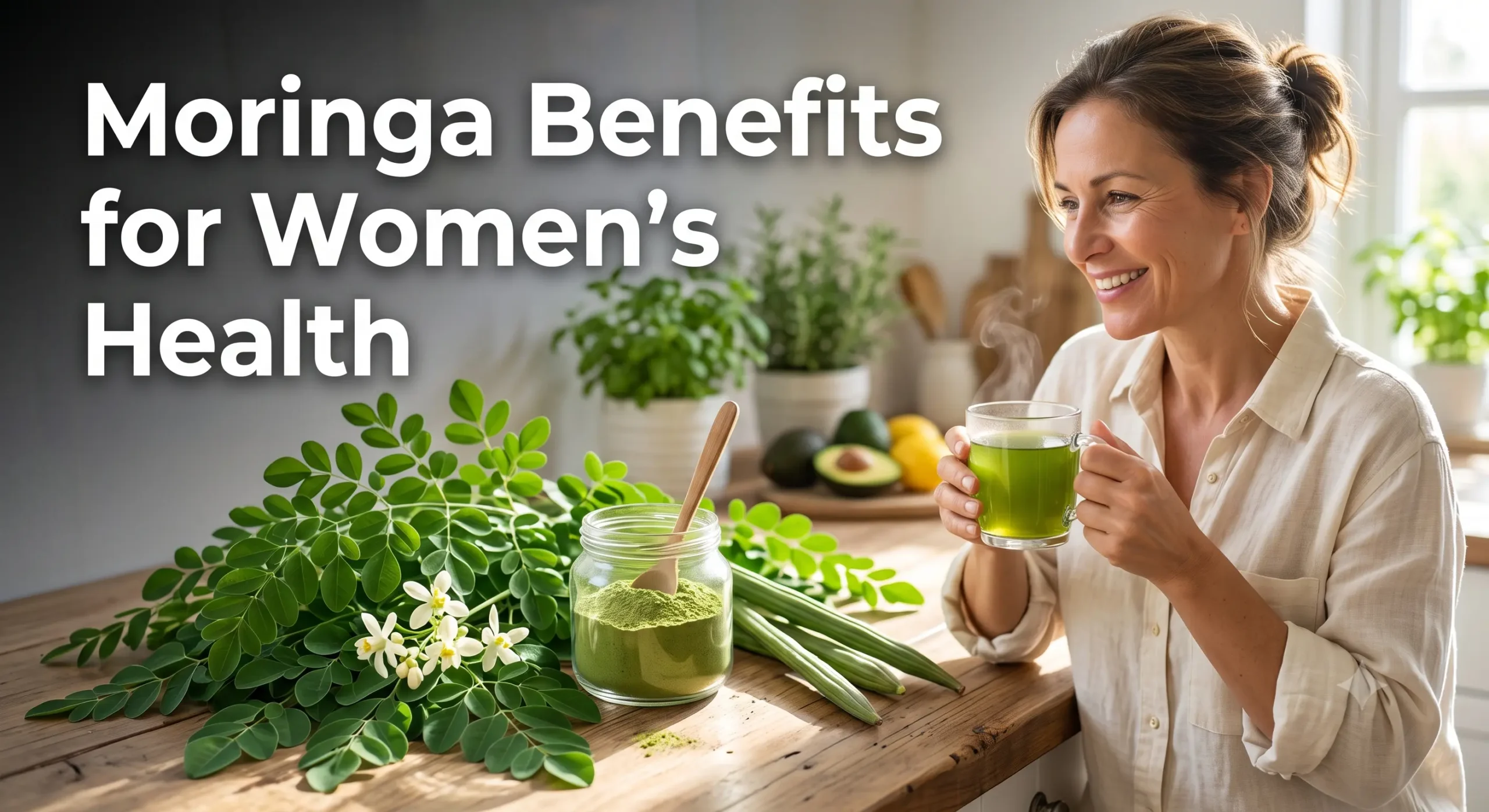
Search “moringa for women” and you’ll find claims all over the map: hormone balancer, fertility booster, menopause fix, even a “natural birth control.” Some of these can’t both be true at the same time, which is usually a sign the marketing has outrun the science.
So let’s slow down and go through what actually holds up, what’s genuinely promising but early, and what’s just wellness-blog noise.
Why Moringa Gets Marketed Specifically to Women
Moringa leaf is naturally rich in iron, calcium, vitamin A, vitamin C, and antioxidant plant compounds. Women deal with a few health concerns more often than men, iron loss from menstruation, bone density decline with age, and hormonal shifts through different life stages, which is exactly why moringa’s nutrient profile gets pitched so heavily at women specifically. That part is reasonable. Where things get shakier is when general nutrition turns into specific hormone or fertility claims.
Moringa Tea Benefits for Women: The Realistic Picture
Moringa tea is really just a gentler, more diluted way to get the same leaf compounds you’d find in the powder, iron, antioxidants, vitamin C, and a mild dose of anti-inflammatory plant compounds. It’s not a separate product with unique effects; it’s the same plant, lower concentration.
For women specifically, that means moringa tea may offer the same modest support for iron intake, antioxidant activity, and general nutrient gaps as the powder, just in a smaller, easier-to-sip dose. It’s a reasonable, low-risk way to try moringa, though don’t expect tea to work faster or differently than powder just because it’s brewed.
Where the Evidence Is Actually Strongest: Lactation Support
If there’s one area where moringa’s reputation for women’s health has real research behind it, this is it. Moringa has been used traditionally across South Asia, the Philippines, and parts of Africa as a galactagogue, meaning a food believed to support breast milk production, and it’s earned the nickname “Mother’s Best Friend” in some cultures.
Modern research backs this up better than most other claims on this list. Multiple controlled studies looking at postpartum mothers have found moringa supplementation associated with increased milk volume compared to placebo, and a review pooling several of these trials found the evidence for moringa as a natural galactagogue was more consistent than for most other herbal options.
Reference : https://pubmed.ncbi.nlm.nih.gov/33164294/ ( Is it safe to consume traditional medicinal plants during pregnancy? )
There’s an important flip side worth knowing, though. Moringa appears to work partly by raising prolactin, the hormone responsible for milk production. That’s helpful during breastfeeding, but elevated prolactin outside of pregnancy or lactation can actually disrupt menstrual cycles and mood in some people. So this benefit is genuinely strongest for postpartum, breastfeeding women, not a general “take it anytime” hormone booster.
As always, a new mother should check with her doctor before adding moringa to a breastfeeding routine, especially alongside any other supplements or medications.
Curious What Moringa Seeds Look Like in Action?
Watch how one moringa-based formula turns these seed nutrients into a simple daily routine — in under 3 minutes.
 Video thumbnail — add later
2:30
Video thumbnail — add later
2:30
60-day money-back guarantee
*Supports levels already within normal range. This post contains an affiliate link — we may earn a commission at no extra cost to you. Statements have not been evaluated by the FDA. Not intended to diagnose, treat, cure, or prevent any disease.
Iron, Anemia, and Menstrual Health
Moringa leaf is a solid source of non-animal iron, and it comes packaged with vitamin C, which helps the body absorb iron more effectively. Since women lose iron monthly through menstruation and are more prone to iron-deficiency anemia than men, this is one of the more straightforward, believable nutritional benefits on the list.
That said, “contains iron” isn’t the same as “treats anemia.” If you’re dealing with fatigue, heavy periods, or diagnosed anemia, moringa can be a helpful dietary addition, but it’s not a substitute for medical evaluation or iron supplementation your doctor may actually recommend.
Bone Health
Moringa leaf provides calcium and some vitamin K, both of which matter for bone strength, especially as estrogen declines after menopause and bone density naturally drops. Getting these nutrients from food or a leaf supplement is a reasonable piece of an overall bone health strategy.
It’s not a replacement for calcium-rich foods, weight-bearing exercise, or medical bone density monitoring, though. Think of it as one small contributor among several, not a stand-alone fix.
Menopause, Hormones, and PMS: Where to Be Skeptical
This is where a lot of the wilder claims live. You’ll see moringa described as a “natural hormone regulator” that balances estrogen, progesterone, and testosterone, or a fix for hot flashes, mood swings, and brain fog during menopause.
Reference : https://pubmed.ncbi.nlm.nih.gov/10675284/ ( Role of Moringa oleifera leaf extract in the regulation of thyroid)
Here’s the honest state of the evidence: moringa does contain plant compounds called phytoestrogens, which can weakly interact with estrogen receptors. That’s a real, measurable property. But weak receptor interaction in a lab study is very different from proven relief of menopause symptoms in real women, and there isn’t strong clinical evidence yet showing moringa reliably reduces hot flashes, stabilizes mood, or “balances” hormones the way supplement marketing implies.
If moringa happens to help you feel better during menopause, it may be coming more from general nutrient support, better blood sugar stability, or antioxidant activity than from any specific hormone-correcting mechanism. That’s still a legitimate benefit, just a more modest one than “hormone regulator” suggests.
Fertility Claims Are Genuinely Contradictory Right Now
You’ll find some sources claiming moringa supports fertility and helps women conceive, and others claiming it acts like a natural contraceptive that reduces conception. Both claims trace back mostly to small, older animal studies, not solid human trials, and they don’t agree with each other.
When the marketing claims directly contradict each other like this, that’s a strong sign the underlying research isn’t settled. If fertility is a personal priority for you, this isn’t an area to base decisions on supplement blog claims, a conversation with your doctor or a fertility specialist is the right move.
Safety Considerations Specific to Women
A few precautions are worth taking seriously:
- Pregnancy: Medical sources are notably more cautious here than wellness blogs. Some parts of the moringa plant have raised concerns about uterine stimulation, so pregnant women should talk to a doctor before using any moringa product, leaf, seed, or supplement.
- Prolactin-sensitive conditions: If you already have elevated prolactin or a related hormonal condition, moringa’s prolactin-raising effect could be worth discussing with your doctor before use.
- Medication interactions: Moringa may affect blood sugar and blood pressure, which matters if you’re on medication for either.
- Thyroid conditions: Some research suggests moringa could affect thyroid function, particularly with iodine deficiency, so this is another good doctor-check item.
Also Read: Moringa Leaf Benefits: What Science Actually Says About This “Miracle Tree”
Frequently Asked Questions
-
Does moringa tea help with hormonal balance?
It contains phytoestrogens that weakly interact with estrogen receptors, but strong clinical evidence for meaningfully “balancing” hormones is still lacking. Any benefit is more likely tied to general nutrition than a targeted hormonal fix.
-
Is moringa good for breast milk supply?
This is genuinely moringa’s best-supported women’s health benefit. Multiple controlled studies link it to increased milk volume in breastfeeding mothers, though it’s still worth checking with your doctor before starting it postpartum.
-
Can moringa help with menopause symptoms?
Possibly, in a modest, indirect way through general nutrient and antioxidant support, but there isn’t strong clinical proof it directly relieves hot flashes or mood swings. Be cautious of sources claiming it as a menopause “fix.”
-
Is moringa safe during pregnancy?
This is an area with genuine caution flags from credible medical sources, unlike some wellness blogs that promote it during pregnancy. Talk to your doctor before using any moringa product if you’re pregnant.
-
Does moringa help with iron deficiency?
It’s a good plant-based source of iron paired with vitamin C for better absorption, which can support women prone to low iron from menstruation. It’s a helpful addition, not a replacement for medical treatment of diagnosed anemia.
Curious What Moringa Seeds Look Like in Action?
Watch how one moringa-based formula turns these seed nutrients into a simple daily routine — in under 3 minutes.
Video thumbnail — add later
2:30
60-day money-back guarantee
*Supports levels already within normal range. This post contains an affiliate link — we may earn a commission at no extra cost to you. Statements have not been evaluated by the FDA. Not intended to diagnose, treat, cure, or prevent any disease.
The Bottom Line
Moringa’s genuine strengths for women’s health are fairly specific: solid iron and calcium content, a real and reasonably well-studied role supporting breast milk production postpartum, and general antioxidant support. The bigger claims, hormone balancing, menopause relief, fertility effects, are either very early-stage or genuinely contradictory across sources right now. Enjoy moringa tea or powder as a nutrient-dense addition to your routine, just keep expectations realistic, and loop in your doctor for anything related to pregnancy, breastfeeding, or existing hormone-related conditions.