
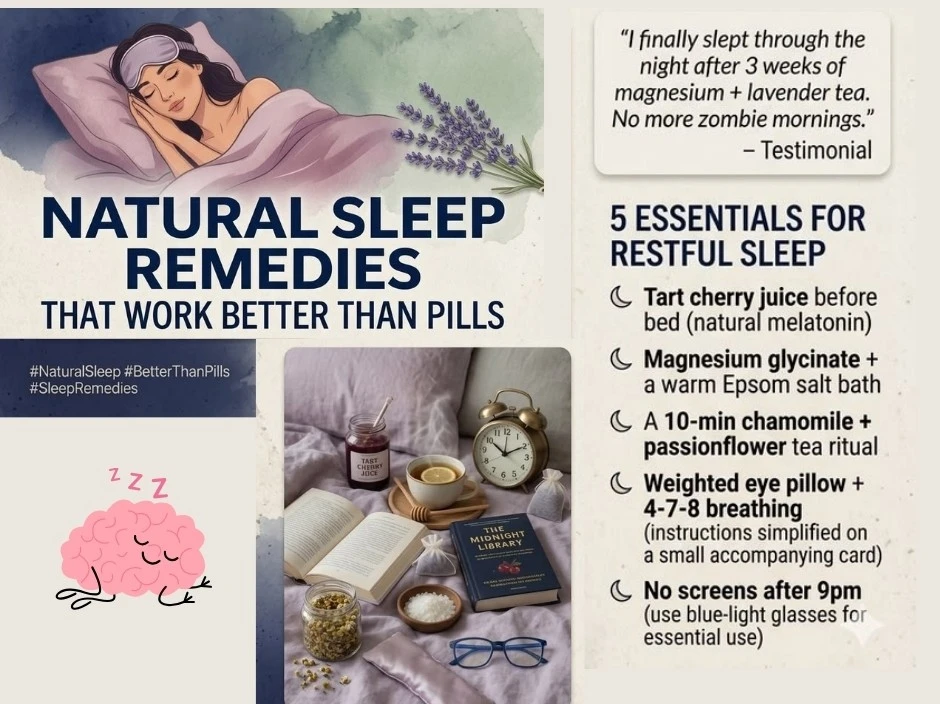
Simple, natural ways to fall asleep faster, stay asleep longer, and wake up actually rested.
Some nights, you fall asleep the second your head hits the pillow. Other nights, you’re staring at the ceiling at 1 AM, wide awake, wondering why your brain picked tonight to replay every conversation from the last five years.
If that sounds familiar, you’re not alone — and you don’t necessarily need a prescription to fix it. A lot of restless nights come down to habits, timing, and a few missing nutrients, not something seriously wrong with you. This guide walks through natural remedies, foods, herbs, and simple habits that genuinely help people fall asleep faster and stay asleep longer, based on what sleep research actually supports.
Why Good Sleep Matters More Than You Think
It’s easy to treat sleep as the thing you sacrifice when life gets busy. But your body treats it as non-negotiable maintenance time. Here’s what consistently good sleep actually does for you:
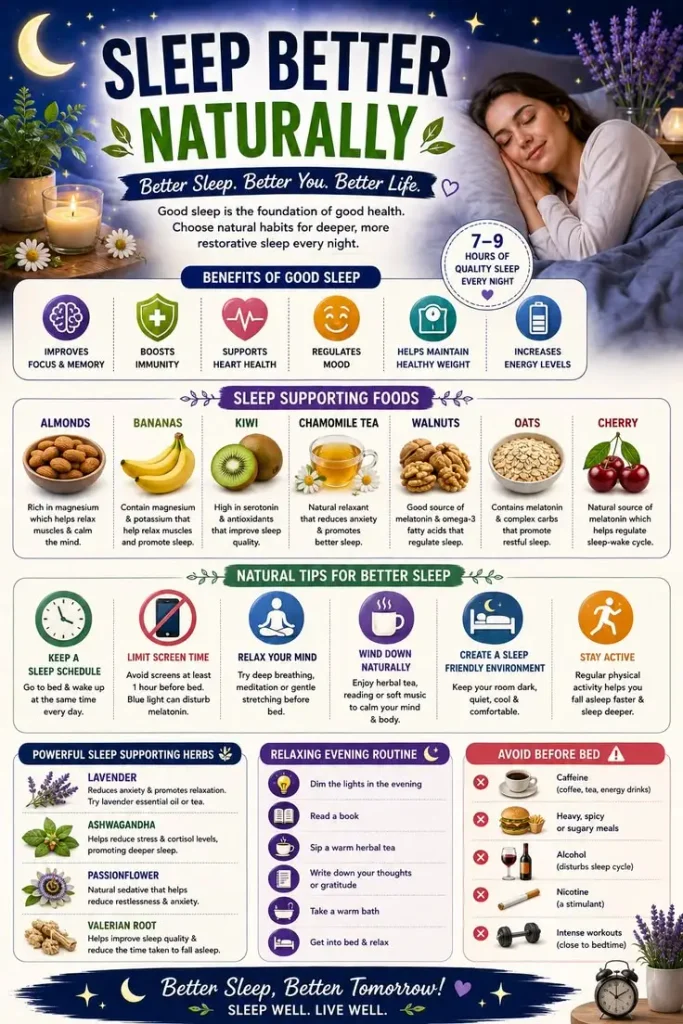
- Improves focus and memory — your brain files away the day’s information during sleep, which is part of why everything feels foggier after a bad night
- Boosts immunity — your immune system does a lot of its repair work while you’re asleep
- Supports heart health — poor sleep is linked to higher blood pressure and added strain on your cardiovascular system over time
- Regulates mood — sleep and emotional regulation are closely connected, which is why everything feels more irritating after a rough night
- Helps maintain a healthy weight — sleep affects the hormones that control hunger and fullness
- Increases energy levels — the obvious one, but worth saying: consistent sleep is still the most reliable energy fix there is
Most adults need somewhere between 7 and 9 hours of quality sleep a night. Notice the word “quality” — hours in bed and hours actually asleep aren’t the same thing, which is part of why some people sleep 8 hours and still wake up tired.
Foods That Naturally Support Better Sleep
What you eat during the day quietly shapes how well you sleep at night. A few foods stand out for containing natural compounds tied to relaxation and sleep quality:
- Almonds — rich in magnesium, a mineral that helps relax muscles and calm the nervous system
- Bananas — contain magnesium and potassium, both linked to muscle relaxation
- Kiwi — high in serotonin and antioxidants; some small studies link kiwi before bed to better sleep quality
- Chamomile tea — a traditional relaxant that may help ease anxiety before bed
- Walnuts — a natural source of melatonin and omega-3 fatty acids, which support a regular sleep-wake cycle
- Oats — contain melatonin along with complex carbs that support restful sleep
- Tart cherries — one of the few natural foods containing measurable melatonin, along with tryptophan, the building block your body uses to make it
None of these will knock you out on their own. Think of them as gently supporting your body’s natural wind-down process, especially when eaten consistently as part of your evening routine.
THE 30-SECOND “CHERRY TRICK” THAT STOPS 3 AM WAKE-UPS AND RACING THOUGHTS
A doctor–recommended technique that targets cortisol at its source — stopping the racing thoughts and resetting your sleep cycle naturally. No pills. No prescriptions. Works the very first night.

Most people sleep 6–7 hours straight the very first night they try it
Powerful Herbs for Restful Sleep
Beyond food, a handful of herbs have a long history of traditional use for sleep and calm — and modern research has started catching up on a few of them:
Lavender
Often used as tea, oil, or in a diffuser, lavender is linked to reduced anxiety and easier relaxation before bed. Some people rub a few drops of diluted lavender oil near their pillow or neck; others prefer sipping it as tea.
Ashwagandha
An adaptogenic herb traditionally used to help the body manage stress. Some research suggests it may help lower cortisol levels, which could support deeper, more restful sleep for people whose racing thoughts are stress-driven.
Passionflower
Used traditionally as a mild, natural sedative. Early research suggests it may help reduce restlessness and anxiety, though larger studies are still needed to confirm how consistent the effect is.
Valerian Root
One of the more studied natural sleep herbs. Some research links it to modest improvements in sleep quality and a shorter time to fall asleep, though results across studies are mixed.
A quick note: herbal doesn’t automatically mean risk-free. If you’re pregnant, nursing, or taking medication, check with a doctor before adding any new herb to your routine.
A Closer Look: Tart Cherry, Magnesium, and Lemon Balm
A few natural ingredients keep showing up across sleep research more than most others. Here’s what each one actually does, based on the evidence so far — not the hype.
Tart Cherry
Tart cherries (specifically the Montmorency variety) are one of the few natural foods that contain measurable melatonin, along with tryptophan, the amino acid your body converts into serotonin and then melatonin. A small pilot study on adults with insomnia found that drinking tart cherry juice for two weeks was linked to falling asleep faster and getting noticeably more total sleep compared to a placebo.
The catch: that study only had a handful of participants, so it’s a promising early result, not a guarantee. Still, tart cherry has more research behind it than most “natural sleep hack” ingredients, which is why it shows up so often in sleep-support formulas.
Magnesium
Magnesium plays a role in calming the nervous system and relaxing muscles, and low magnesium levels have been linked to poorer sleep quality in some studies. A lot of people don’t get quite enough magnesium from diet alone, especially if stress or certain medications deplete it.
Magnesium glycinate is one of the more commonly recommended forms for sleep specifically, since it’s gentle on the stomach and well absorbed. It’s not a sedative — it works more by helping your body settle into a relaxed state rather than knocking you out.
Lemon Balm
Lemon balm is a mild, calming herb from the mint family, traditionally used in teas to ease anxiety and support relaxation. Modern research on it is still fairly limited, but early studies suggest it may help reduce restlessness and support a calmer state before bed, especially when combined with other calming ingredients like chamomile or valerian root.
It’s considered one of the gentler options on this list — a good fit for people who want a subtle calming effect rather than something strong.
These three ingredients target different parts of the sleep puzzle — tart cherry supports your natural melatonin signal, magnesium helps your nervous system relax, and lemon balm eases a busy mind. That’s actually why you’ll often find them combined in one formula rather than taken separately.
Simple Home Remedies People Actually Use
You don’t need anything fancy to start improving your sleep tonight. A few low-effort remedies people consistently come back to:
- Warm milk with a touch of honey. An old-school comfort ritual — the warmth and routine itself can be as calming as the ingredients.
- A warm Epsom salt bath. Epsom salt contains magnesium, and warm water naturally lowers your core body temperature afterward, which mimics your body’s natural pre-sleep signal.
- A short herbal tea ritual. Chamomile or passionflower tea, sipped slowly about 30 minutes before bed, doubles as both a calming habit and a wind-down cue for your brain.
- 4-7-8 breathing. Breathe in for 4 seconds, hold for 7, exhale slowly for 8. It’s a simple technique that can help slow your heart rate and quiet a busy mind.
- A weighted eye pillow or blanket. The gentle pressure is soothing for some people and can make it easier to settle down physically, not just mentally.
Related: Updated Yu Sleep Review: Does This Natural Sleep Supplement Actually Work?
Your Evening Routine Matters More Than You’d Guess
A relaxing bedtime routine trains your brain to recognize “it’s time to wind down,” the same way a toddler’s bedtime routine works for them. A simple version looks like this:
- Dim the lights in your home an hour or so before bed
- Read a physical book instead of scrolling your phone
- Sip a warm, caffeine-free herbal tea
- Jot down a few thoughts or a quick gratitude note, if your mind tends to race
- Take a warm shower or bath
- Get into bed at a consistent time and let yourself relax
What to Avoid Before Bed
Sometimes better sleep is less about adding something new and more about removing what’s working against you:
- Caffeine — coffee, tea, and energy drinks can stay active in your system for 5-6 hours or more
- Heavy, spicy, or sugary meals — these can cause discomfort and blood sugar swings that disrupt sleep
- Alcohol — it might make you drowsy at first, but it disrupts your sleep cycle later in the night
- Nicotine — a stimulant, despite feeling “relaxing” to some smokers
- Intense workouts right before bed — exercise is great for sleep overall, but timing matters; save intense sessions for earlier in the day
10 Sleep Hygiene Habits Worth Building
“Sleep hygiene” just means the habits that set you up for consistent, good sleep. Most sleep specialists come back to some version of this list:
- Keep a regular sleep schedule. Go to bed and wake up at the same time daily, even on weekends.
- Avoid screens before bed. Try to stay off phones, TVs, and laptops for at least an hour before sleep.
- Limit caffeine and heavy meals. Avoid both for 4-6 hours before bedtime.
- Create a sleep-friendly room. Keep your bedroom quiet, dark, cool, and comfortable.
- Stay physically active. Regular daytime exercise supports better sleep — just avoid intense workouts close to bedtime.
- Relax before sleep. Reading, deep breathing, or calming music all help signal wind-down time.
- Get daylight exposure. Natural light during the day helps regulate your body’s internal clock.
- Avoid nicotine and alcohol. Both interfere with sleep quality, even if they don’t feel like it in the moment.
- Limit naps. If you nap, keep it short (20-30 minutes) and avoid napping late in the day.
- Keep your mind calm. Writing down tomorrow’s to-do list or today’s worries can help clear mental clutter before bed.
Habits and herbs go a long way, but some nights your body needs a little extra nutritional support — especially if stress, age, or an inconsistent schedule have thrown off your natural melatonin production. That’s actually where the tart cherry remedy mentioned earlier comes in, and there’s a simple 30-second version of it that’s worth knowing about.
Related: Always Wake Up at 3 AM? Here’s Why — And How Tart Cherry Juice for Sleep Actually Helps
Frequently Asked Questions
-
How long does it take for natural sleep remedies to work?
Most natural remedies work gradually rather than overnight. Habit changes like a consistent schedule or reduced screen time often show results within a week or two. Herbs and food-based remedies tend to work best with consistent daily use over several weeks, not as a one-time fix.
-
Can I combine multiple natural remedies at once?
Generally yes — a consistent bedtime routine, a sleep-friendly room, and a calming tea or herb can all work together. Just introduce new herbs one at a time if you’re checking for sensitivities, and check with a doctor if you’re combining herbal remedies with medication.
-
What’s the difference between trouble falling asleep and waking up during the night?
They often have different root causes. Trouble falling asleep is frequently tied to a racing mind, screen exposure, or caffeine timing. Waking up during the night is more often linked to stress, blood sugar swings, or an inconsistent sleep schedule. Identifying which one you struggle with helps you pick the right remedy.
-
Are natural sleep remedies safe for everyone?
Most of the habits and foods on this list are safe for most people. Herbs are generally well-tolerated, but “natural” doesn’t automatically mean “risk-free” — check with a doctor first if you’re pregnant, nursing, or taking any medication, especially sedatives or antidepressants.
The Bottom Line
Better sleep rarely comes from one single trick. It usually comes from stacking a few small things together — a consistent schedule, a wind-down routine, the right foods, and maybe a supportive herb or two — until your body relearns what a normal night’s sleep feels like. Start with one or two changes from this list, give them a couple of weeks, and build from there.
THE 30-SECOND “CHERRY TRICK” THAT STOPS 3 AM WAKE-UPS AND RACING THOUGHTS
A doctor–recommended technique that targets cortisol at its source — stopping the racing thoughts and resetting your sleep cycle naturally. No pills. No prescriptions. Works the very first night.
Most people sleep 6–7 hours straight the very first night they try it
Reference: LAc, M. M. (n.d.). Natural ways to get reliably good sleep.