
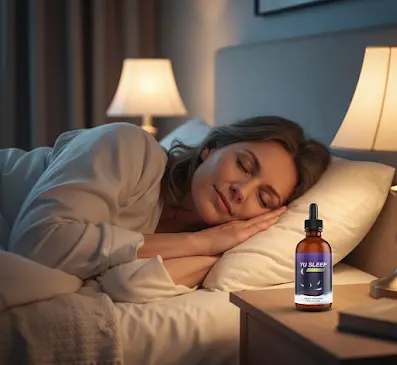
It’s almost 3 AM. You’ve counted sheep, tried the breathing thing, flipped your pillow to the “cold side” twice, and your brain is still wide awake replaying a conversation from three years ago. Sound familiar?
If you’ve been down that road enough times, you’ve probably searched for a fix — and that’s likely how you landed on Yu Sleep. Maybe you saw an ad, maybe a friend mentioned it, or maybe you’re just tired (pun intended) of products that promise the world and deliver nothing.
This review breaks down what Yu Sleep actually is, what’s in it, what the evidence says about those ingredients, and who it might actually help. No hype, no scare tactics — just a clear, honest look so you can decide for yourself.

Yu Sleep is a liquid sleep supplement that combines calming compounds (like L-theanine and magnesium), a modest dose of melatonin, and tart cherry extract. It’s built for people who fall asleep okay but wake up at 2-3 AM, or whose minds race at bedtime. It’s not a knockout pill, and it’s not a substitute for treating a diagnosed sleep disorder — but for everyday “my brain won’t shut off” sleep struggles, the ingredient list lines up with what sleep research generally supports.
What Is Yu Sleep?
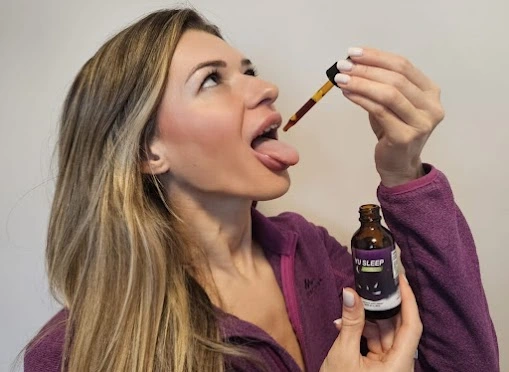
Yu Sleep is a liquid tincture, not a pill or gummy. You take it under your tongue (that’s called “sublingual” use) about 30 minutes before bed, and it’s absorbed through the tissue in your mouth instead of going through your stomach.
The company markets it as a natural, non-habit-forming option built around a mix of calming amino acids, botanical extracts, and a small amount of melatonin — rather than a single mega-dose of one ingredient. The idea is to support your body’s own wind-down process instead of forcing your brain to shut off.
That’s a reasonable approach on paper. Whether it works for you personally will still depend on why you’re not sleeping well in the first place — stress, screen time, an inconsistent schedule, or something else.
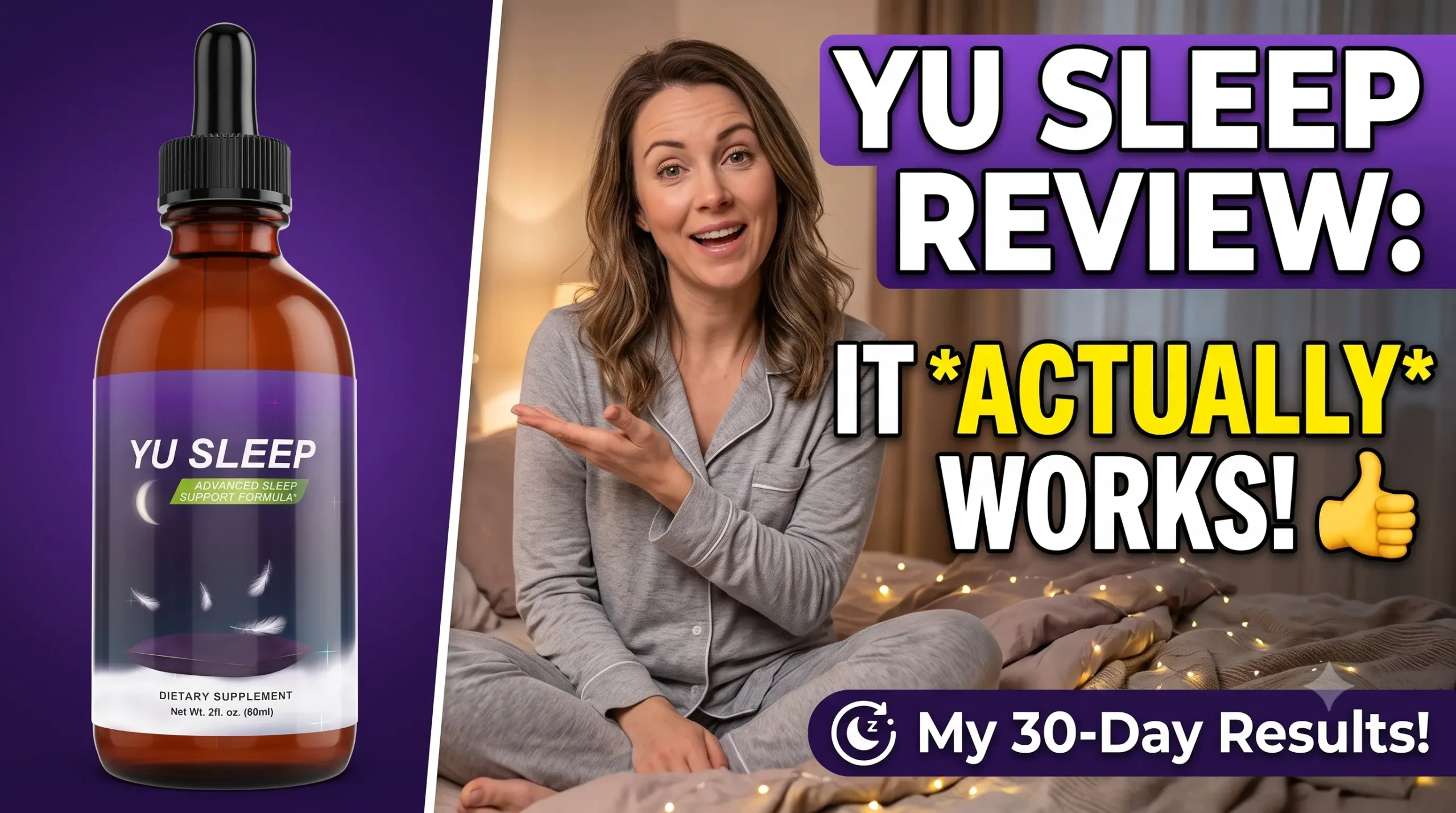
▶ Watch: How Yu Sleep is meant to work (2-min explainer)
What’s Inside the Formula
Here’s where you should pay attention as a smart shopper. Different retailers list slightly different ingredient breakdowns for Yu Sleep, and exact amounts aren’t consistently published across sources. That’s common with supplement marketing pages, but it also means you should always check the actual supplement facts label on your bottle or the official order page before buying — not just a review site.
With that caveat out of the way, here are the ingredients that show up most consistently, and what current research generally says about them:
| Ingredient | What It’s Used For | What Research Says |
|---|---|---|
| Tart Cherry Extract | Natural source of melatonin; supports sleep timing | Small studies link it to modestly longer sleep time. More research is needed, and effects are generally mild rather than dramatic. |
| Melatonin (0.9mg) | Signals to your body that it’s time to wind down | Well-studied for helping people fall asleep faster. This is a low, “gentle nudge” dose rather than a high dose, which may help avoid next-day grogginess for some people. |
| L-Theanine | Promotes calm, relaxed mental state | Research supports its use for reducing pre-sleep anxiety and mental chatter, without causing drowsiness during the day. |
| 5-HTP | A building block your body uses to make serotonin | Some clinical research links it to falling asleep faster and fewer night wakings. It can interact with certain antidepressants, so check with a doctor if you’re on medication. |
| Magnesium Glycinate | Supports muscle relaxation and nervous system calm | Magnesium deficiency is linked to poorer sleep quality in some studies. Glycinate is a well-absorbed, gentle form. |
| GABA | A calming neurotransmitter | Oral GABA’s ability to cross into the brain is debated among researchers, so its direct effect here is less clear-cut than some marketing suggests. |
| Apigenin & Lemon Balm | Plant compounds traditionally used for relaxation | Used for generations in calming teas; modern clinical evidence is still limited but generally supportive of mild calming effects. |
| B Vitamins (B6/B12/B2) | Support nervous system function and circadian regulation | Important for overall nervous system health; not a standalone sleep aid, but a reasonable supporting ingredient. |
None of this means Yu Sleep is a guaranteed fix. It means the formula leans on ingredients that sleep researchers have actually studied, rather than an unproven “miracle blend.” That’s a meaningfully different starting point than a lot of products on the market.
If you’ve watched the official video or read the long-form sales page, you’ve probably noticed it leans hard into a dramatic personal story, and it cites specific sleep-tracker numbers from named customers. Individual results like that can’t be independently verified, so it’s smart to treat them as anecdotes, not proof.
That said, “dramatic marketing” and “scam” aren’t the same thing. The ingredient list is real and lines up with actual sleep research, the company discloses its facility standards, and the 60-day money-back guarantee gives you a real way to test it risk-free. Our take: judge Yu Sleep on the ingredients and the guarantee, not on the theatrics.
How People Typically Use It (and What to Expect)
Most instructions call for measuring out the dropper, holding it under your tongue for about 30 seconds, then swallowing — roughly 30 minutes before bed. Consistency matters more than a single dose. Supplements like this tend to work gradually, not instantly.
- First few nights: Some people notice a calmer mind at bedtime before they notice better sleep itself.
- First week: This is when most users report fewer middle-of-the-night wake-ups, if the formula works for them.
- After 2-4 weeks: Any benefit tends to become more consistent as it becomes part of a nightly routine.
Results vary a lot from person to person. Sleep is affected by stress, caffeine, screen time, and underlying health conditions, so a supplement is one piece of the puzzle, not a substitute for good sleep habits.
Pros and Cons
✅ What’s Good
- Liquid form may absorb faster than pills for some people
- Uses a low melatonin dose instead of a mega-dose
- Formulated with researched, non-sedative ingredients
- Non-habit forming, based on the ingredient profile
- Comes with a 60-day money-back guarantee
❌ What to Consider
- Priced higher than basic melatonin gummies
- Only sold through the official website
- Not an instant “knockout” effect — takes days to notice full results
- Mild herbal taste that isn’t for everyone
- Exact ingredient amounts vary by source and should be confirmed on your label
Who Might Find This Helpful (and Who Should Skip It)
This may be worth trying if:
- Your mind races at bedtime and you struggle to switch off
- You regularly wake up around 2-4 AM and can’t fall back asleep
- You want to avoid high-dose melatonin or prescription sleep aids
- You’re okay giving a supplement a week or two to show results
You should probably skip it — or talk to a doctor first — if:
- You have a diagnosed sleep disorder like sleep apnea or chronic insomnia
- You’re pregnant, nursing, or managing an existing health condition
- You’re currently taking medication that affects sleep or the nervous system
- You’re expecting a single dose to knock you out instantly
No supplement — this one included — can undo the effects of a stressful day, three cups of afternoon coffee, or scrolling on your phone in bed. Yu Sleep is designed to support your body’s own sleep process, not override your habits. Pairing it with basic sleep hygiene (dimmer lights, a consistent bedtime, less screen time) gives it the best shot at working for you.
Yu Sleep vs. Other Common Options
| Option | Typical Price | Best For | Watch Out For |
|---|---|---|---|
| Yu Sleep | Mid-range | Racing thoughts + middle-of-the-night wake-ups | Higher cost, online-only |
| Basic Melatonin Gummies | Budget | Simple, occasional jet lag or schedule shifts | Can cause grogginess at higher doses |
| Prescription Sleep Aids | Varies (Rx) | Diagnosed, severe insomnia | Dependency risk; requires a doctor’s supervision |
Price and the Money-Back Guarantee
As of this writing, Yu Sleep is priced in three tiers, and the per-bottle cost drops the more you buy:
| Package | Price Per Bottle | Best For |
|---|---|---|
| 1-Month Supply | $69 | First-time buyers who want to test it |
| 3-Month Supply | $59 | Giving it a fair, multi-week trial |
| 6-Month Supply | $39 | Buyers ready to commit long-term (biggest savings) |
Prices and promotions can change, so it’s worth double-checking the live price before you order. Every package comes with a 60-day money-back guarantee, and the 3- and 6-month packages currently include two bonus eBooks (a wind-down bedtime story collection and a sleep-focused habits guide) at no extra cost.
Frequently Asked Questions
Based on its ingredient profile, it’s designed for regular nightly use without sedative dependency. That said, “safe for most people” isn’t the same as “safe for everyone” — check with your doctor if you’re pregnant, nursing, or on medication.
Some people notice a calming effect the first night. The fuller effect on staying asleep and waking up refreshed tends to show up after about a week of consistent use, though this varies by person.
The low melatonin dose is meant to avoid the “melatonin hangover” that higher-dose products can cause. Individual response still varies.
No pharmaceutical sedatives are used in the formula, so it isn’t expected to create chemical dependency the way some prescription sleep medications can.
Only through the official website. That’s also the only place the 60-day money-back guarantee applies.
Bottom Line
Yu Sleep isn’t a miracle fix, and no honest review should tell you it is. What it does offer is a formula built around ingredients that sleep research generally supports — a modest melatonin dose, calming compounds like L-theanine and magnesium, and tart cherry extract — instead of one oversized dose of a single ingredient.
If your main struggle is a busy mind at bedtime or waking up in the middle of the night, it’s a reasonable option to try, especially with a 60-day guarantee backing it. If you’re dealing with a diagnosed sleep disorder, talk to your doctor first — supplements work alongside medical care, not instead of it.
Scientific References:
1. Melatonin and Sleep Quality
Effect of melatonin supplementation on sleep quality: a systematic review
2. 5-HTP and Sleep Quality
The impact of 5-hydroxytryptophan supplementation on sleep quality
3. GABA Mechanisms and Sleep
GABA mechanisms and sleep
4. L-Theanine as a Natural Sleep Aid
In Search of a Safe Natural Sleep Aid
5. Combination of Melatonin, Vitamin B6, and Medicinal Plants
A combination of melatonin, vitamin B6 and medicinal plants in the treatment of mild-to-moderate insomnia
6. Vitamin B2 and Sleep Quality
Vitamin B2 (Riboflavin) for better sleep
7. Tart Cherry Juice and Sleep
Effect of tart cherry juice (Prunus cerasus) on melatonin levels and sleep quality
8. Melatonin in Sleep Disorders
Melatonin in sleep disorders
9. 5-HTP and Sleep Stability in Parkinson’s Disease
Preliminary finding of a randomized, double-blind, placebo-controlled trial of 5-HTP in Parkinson’s disease
10. Oral GABA and Sleep Benefits
Effects of Oral Gamma-Aminobutyric Acid (GABA) Administration on Stress and Sleep
11. L-Theanine and Brain Activity
A Novel Theanine Complex, Mg-L-Theanine Improves Sleep Quality
12. Vitamin B6 and Dream Recall
Effects of Vitamin B6 (Pyridoxine) and a B Complex Preparation on Dream Recall
13. Vitamin B2 and Sleep Performance
The Association Between Dietary Vitamin B2 Intake, Sleep Quality, And Daytime Alertness
14. Tart Cherry Juice and Insomnia
Pilot Study of the Tart Cherry Juice for the Treatment of Insomnia in Older Adults
15. Melatonin for Primary Sleep Disorders
Meta-analysis: melatonin for the treatment of primary sleep disorders
16. 5-HTP and Sleep Terrors in Children
L -5-Hydroxytryptophan treatment of sleep terrors in children
17. GABA and L-Theanine Mixture and Sleep
GABA and l-theanine mixture decreases sleep latency and improves NREM sleep
18. Dietary Supplements and Sleep Quality
Current Evidence on Common Dietary Supplements for Sleep Quality
19. Vitamin B6 and Sleep Deprivation
Vitamin B6 alleviates chronic sleep deprivation-induced ferroptosis
20. Vitamin B2 and Sleep Quality In Seniors
Essential Vitamin B2 Tips for Optimal Senior Sleep
whoah this blog is great i like reading your posts.
Keep up the good work! You realize, many individuals are hunting round for this
information, you can aid them greatly.