
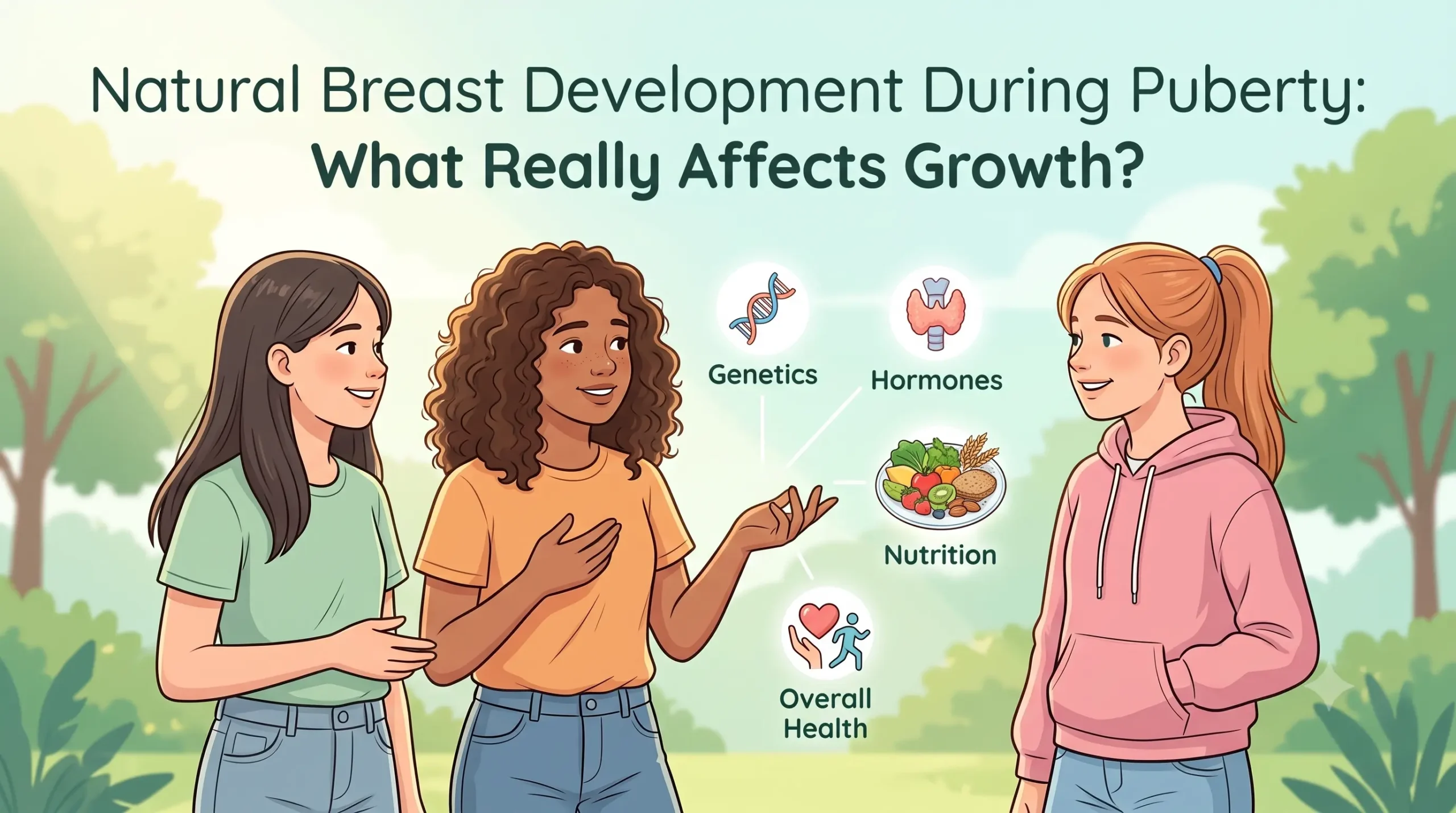
Puberty brings a lot of physical changes, and breast development is one of the earliest and most noticeable ones for most girls. It’s also one of the most misunderstood, with a lot of myths floating around about what speeds it up, slows it down, or determines the final result.
This guide sticks to the facts: what actually drives breast development, what doesn’t, and when it makes sense to talk to a doctor.
Why Breast Development Happens
Breast development is triggered by hormonal changes that kick off puberty. It’s usually one of the very first visible signs that puberty has started, often showing up before other changes like a growth spurt or the start of a menstrual period.
This process is a normal, healthy part of the body maturing, not something to feel embarrassed about. Every person goes through it on their own timeline.
The Hormones Behind It
A few key hormones drive this process:
- Estrogen is the main hormone responsible for breast tissue growth. It signals the body to develop milk ducts and fatty tissue.
- Progesterone joins in a bit later and helps develop the glandular tissue further.
- Growth hormone also plays a supporting role in overall body development during puberty, including breast tissue.
These hormones are produced by the ovaries and, in smaller amounts, other glands in the body. The process is controlled by the brain’s hypothalamus and pituitary gland, which release signals that start the whole chain of hormonal activity.
The Stages of Breast Development
Doctors often describe breast development using a framework called Tanner stages, which break the process into five general stages:
- Stage 1: No visible development yet; this is the pre-puberty stage.
- Stage 2: Small “breast buds” form, often the first noticeable sign of puberty.
- Stage 3: Breast tissue continues growing and becomes more rounded.
- Stage 4: The nipple and areola may form a separate contour from the rest of the breast.
- Stage 5: Full development, where the breast reaches its mature shape.
These stages don’t move on a fixed schedule. Some people move through them quickly, others more gradually, and there’s a wide range of what counts as normal.
Read More: Do Massage, Touching, or Hot Water Make Breasts Bigger?
What Determines Size and Shape
This is where a lot of misinformation shows up. The honest answer is that genetics play the biggest role.
- Genetics largely determine breast size, shape, and how the body distributes fat tissue. Family history is usually the strongest predictor.
- Body weight can influence size somewhat, since breast tissue includes fat, but weight changes don’t change genetic potential.
- Hormone levels vary naturally from person to person, which also contributes to differences in development.
There’s no reliable way to control or predict final size beyond what genetics and natural hormone levels already determine.
Want a fuller, firmer bust — naturally?
Butt Enhancer and Breast Enhancer — natural capsules. Results in as little as 2 weeks.
Common Myths, Debunked
A lot of products and tips online claim to influence breast growth. Here’s what the evidence actually says:
- Specific foods or supplements: No food, vitamin, or supplement has been shown to increase breast size beyond what genetics determine. General good nutrition supports healthy development overall, but it doesn’t target breast tissue specifically.
- Exercises: Chest exercises can strengthen the muscle underneath the breast tissue, which may slightly affect posture and appearance, but they don’t grow breast tissue itself.
- Creams or massages: There’s no solid scientific evidence that topical creams or massage techniques increase breast size.
- Birth control pills: Some hormonal birth control can cause temporary size changes as a side effect, but this isn’t the same as natural developmental growth, and it’s not a method anyone should use for that purpose.
If something sounds too easy to be true for changing a genetically determined trait, it usually is.
Is Uneven Growth Normal?
Yes, very much so. It’s extremely common for one side to develop slightly faster or end up a little different in size or shape than the other. Most people have some natural asymmetry, and it usually isn’t something to worry about.
Significant, sudden differences, or asymmetry paired with pain, lumps, or other symptoms, is worth mentioning to a doctor, just as a general check.
When to Talk to a Doctor
It’s worth reaching out to a doctor or trusted healthcare provider if:
- Development hasn’t started at all by around age 13-14
- There’s noticeable pain, a lump, or unusual changes in the skin
- Growth seems unusually early (before age 8) or unusually delayed
- There’s a big, sudden change in size or shape on one side only
Most of the time, these check-ins are simply reassurance that everything is developing as expected. Doctors see this all the time, and there’s nothing awkward about asking.
Talking to a Parent or Trusted Adult
Puberty can bring up a lot of questions and sometimes some self-consciousness, and that’s completely normal. Talking to a parent, guardian, school nurse, or doctor is a good first step if something feels confusing or concerning. These are common questions, and trusted adults and healthcare providers are there to help, not to judge.
Frequently Asked Questions
-
At what age do breasts stop growing?
Most development wraps up within a few years of starting, often by around age 17-18, though it varies by person. Growth can continue in small ways into the early twenties as the body finishes maturing.
-
What hormones affect breast growth?
Estrogen is the primary hormone, with progesterone and growth hormone also playing supporting roles. These hormones are regulated by signals from the brain’s hypothalamus and pituitary gland.
-
Can diet influence breast development?
General nutrition supports healthy growth and development overall, but no specific food or diet changes breast size beyond what genetics already determine. Extreme dieting or being significantly underweight can affect overall development, which is another reason balanced nutrition matters.
-
Is uneven breast growth normal?
Yes. Slight differences in size or shape between sides are very common and usually not a concern. Marked differences paired with other symptoms are worth checking with a doctor.
-
When should I see a doctor?
If development hasn’t started by around 13-14, seems unusually early, comes with pain or lumps, or shows a sudden major change on one side, it’s a good idea to check in with a healthcare provider for peace of mind.
Key Takeaways
- Breast development is driven mainly by estrogen, with genetics determining most of the final size and shape.
- Tanner stages describe the general process, but timing varies a lot from person to person.
- Diets, supplements, creams, and specific exercises don’t meaningfully change breast size.
- Uneven development is common and usually normal.
- A doctor, school nurse, or trusted adult is the right person to talk to for any concerns about timing or changes.
Puberty looks different for everyone, and there’s no single “right” timeline. Understanding what’s actually happening in the body helps separate real health information from marketing myths, and it’s always okay to ask a trusted adult or doctor if something feels uncertain.
💡 Women Are Talking About This
What if you could go up 1–2 cup sizes — without surgery, injections, or padded bras?
Butt Enhancer and Breast Enhancer is a capsule set with phytoestrogens and plant extracts that support bust firmness, lift, and size — from home. Over 12,000 women have already tried it.
See How It Works →✔ Natural ingredients · ✔ No surgery · ✔ Results visible in 2 weeks