
Male ejaculation is a normal part of sexual and reproductive health. It usually happens during orgasm, when semen is released from the penis.
But have you ever wondered what actually happens inside the body before that moment?
Where does semen come from? Why does it come out in pulses? Why do some men feel tired or relaxed afterward? And is it normal for semen volume to change?
These are common questions, but many men don’t feel comfortable asking them.
Understanding how ejaculation works can help you learn more about your body, recognize normal changes and know when something may need medical attention.
Related: 10 Ways to Improve Your Sexual Health Naturally
Let’s break it down in simple terms.
What Is Male Ejaculation?
Male ejaculation is the process of releasing semen through the penis, usually during sexual climax.
Semen is the whitish or cloudy fluid that comes out during ejaculation. It contains sperm cells along with fluids produced by different reproductive glands.
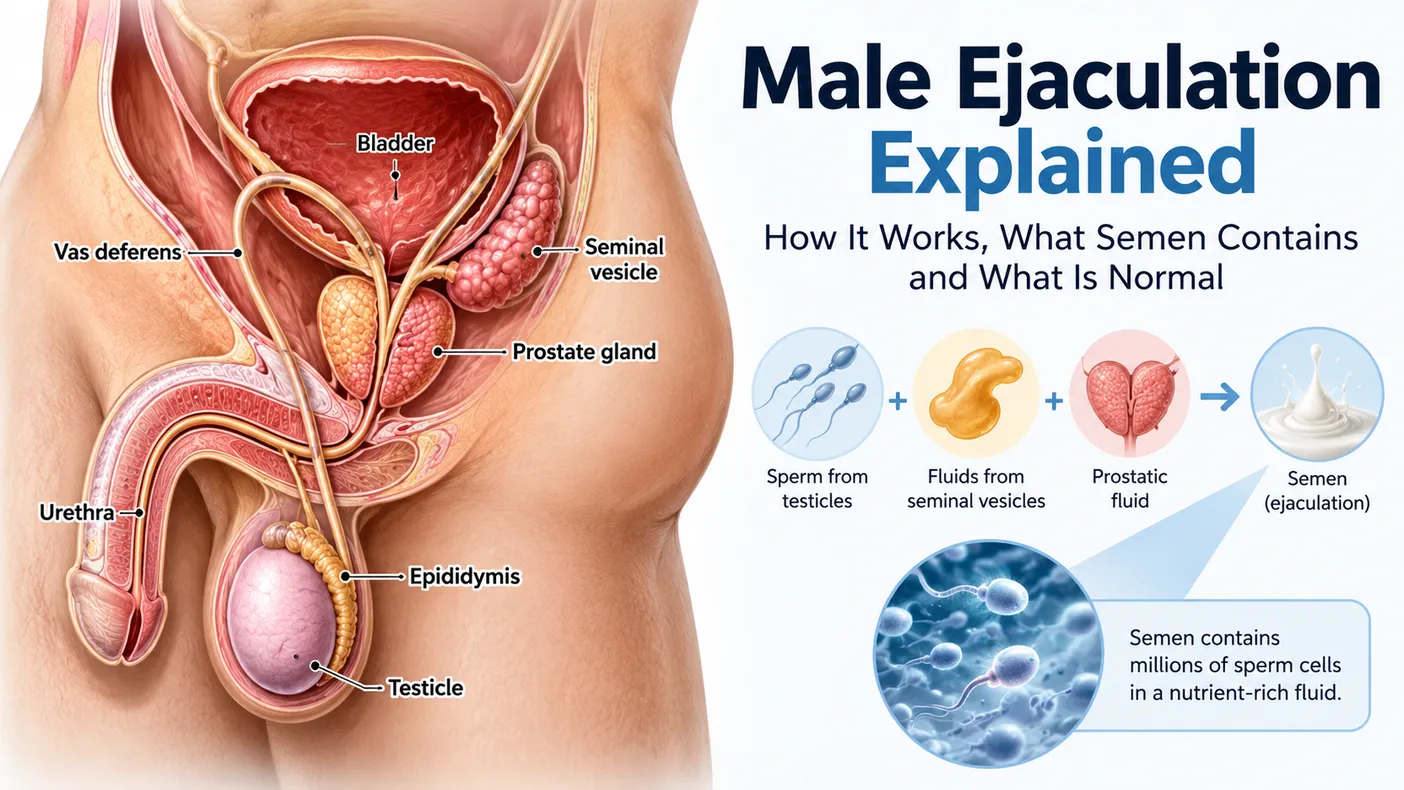
The process involves several parts of the body working together, including:
- The brain
- The spinal cord and nerves
- The testicles
- The vas deferens
- The prostate gland
- The seminal vesicles
- The muscles around the pelvic area
When sexual stimulation reaches a certain level, the nervous system coordinates the movement of semen through the reproductive tract and out of the penis.
Although ejaculation usually happens during orgasm, the two are not exactly the same thing. We’ll explain that difference shortly.
How Does Male Ejaculation Work?
Ejaculation is not a single action. It is a coordinated process involving nerves, muscles and reproductive organs.
Doctors generally describe two main stages: emission and expulsion.
1. The Emission Phase
The first stage is called emission.
During this phase, sperm travels from the epididymis, where it is stored after being produced in the testicles, through the vas deferens.
At the same time, fluids from the seminal vesicles and prostate join the sperm to form semen.
The semen moves into the urethra, the tube that carries urine and semen out through the penis.
The bladder neck also closes during normal ejaculation. This helps prevent semen from moving backward into the bladder.
You can think of this stage as the body preparing the semen for release.
2. The Expulsion Phase
The second stage is called expulsion.
At this point, nerves coordinate rhythmic contractions of muscles around the pelvic area and the base of the penis.
These contractions push semen through the urethra and out of the penis.
This is why semen often comes out in several pulses rather than as one continuous flow.
Both stages depend on the nervous system working properly. Problems involving nerves, muscles or the reproductive organs can sometimes affect ejaculation.
What Is the Difference Between Orgasm and Ejaculation?
People often use the words orgasm and ejaculation as if they mean the same thing.
They are closely connected, but they describe two different processes.
Orgasm is the feeling of intense sexual pleasure or climax. It is mainly a sensory experience processed by the brain and nervous system.
Ejaculation is the physical release of semen through the penis.
For many men, both happen at almost the same time.
However, they can happen separately.
For example, some men experience an orgasm without releasing semen. This is sometimes called a dry orgasm.
Other men may release semen without experiencing the usual sensation of orgasm.
These experiences can have different causes, including certain medical conditions, medicines or previous prostate procedures.
If this happens unexpectedly or becomes a concern, a healthcare professional can help identify the reason.
What Does Semen Contain?
Semen is not made up of sperm alone.
It is a mixture of sperm cells and fluids from several reproductive glands.
Each part has a different role.
Sperm Cells
Sperm are reproductive cells produced in the testicles.
Their main role is to fertilize an egg during reproduction.
Sperm make up only a small part of the total semen volume.
Seminal Vesicle Fluid
The seminal vesicles are two small glands located behind the bladder.
They produce much of the fluid found in semen.
This fluid contains substances such as fructose, which provides energy that helps sperm function.
Prostatic Fluid
The prostate gland adds another portion of fluid to semen.
Prostatic fluid contains several substances, including enzymes and other compounds that help semen change consistency after ejaculation.
Fluid From Other Glands
The bulbourethral glands and smaller glands along the reproductive tract also contribute small amounts of fluid.
Together, these fluids create semen, which carries sperm during ejaculation.
How Much Semen Does a Man Normally Release?
Semen volume can vary from one person to another.
Some men release more, while others release less. This does not automatically mean there is a health problem.
Several factors can affect semen volume, including:
- How recently you last ejaculated.
- Age.
- Overall health.
- Certain medications.
- Hormonal or reproductive conditions.
- Problems affecting the prostate or seminal vesicles.
A lower volume on one occasion is not enough to diagnose a problem.
If you’re concerned about fertility or a persistent change in semen volume, a semen analysis can provide more useful information than judging appearance alone.
A laboratory test measures semen volume and other factors, including sperm concentration, movement and shape.
Remember, the amount of semen released does not tell you by itself whether a man is fertile or sexually healthy.
What Does Normal Semen Look Like?
Semen is usually whitish, cloudy or slightly grey in appearance.
Its texture can also vary. It may initially look thick or sticky and then become more liquid after ejaculation.
Small differences in colour or consistency can happen.
However, some changes deserve attention.
Yellowish Semen
Semen may sometimes appear slightly yellow.
Possible reasons include urine mixing with semen, longer periods without ejaculation, certain medicines or an infection.
A persistent colour change, especially with pain, fever, burning during urination or an unusual smell, should be checked by a healthcare professional.
Watery Semen
Semen that looks thinner than usual is not automatically a sign of infertility.
Volume and consistency can change for several reasons.
If the change continues or you’re concerned about fertility, consider discussing it with a doctor.
Blood in Semen
Blood in semen can make it look pink, red, brown or rust-coloured.
This is known as hematospermia.
It can happen for several reasons, including inflammation, infection or medical procedures.
Although it is often not linked to a serious condition, you should seek medical advice, particularly if it happens repeatedly or comes with pain, fever or blood in your urine.
Why Does the Penis Become Soft After Ejaculation?
After ejaculation, the erection usually starts to go away.
The penis becomes softer as blood flow returns toward its usual resting state.
This is a normal part of the sexual response.
Many men also experience a feeling of relaxation or reduced sexual excitement afterward.
Some may feel sleepy or tired, while others feel completely normal.
These changes are influenced by the nervous system and the body’s response to sexual activity.
The timing and intensity can vary from person to person.
What Is the Refractory Period?
The refractory period is the time after orgasm and ejaculation when a man may find it difficult or impossible to get another erection or reach another orgasm.
For some men, it lasts only a short time. For others, it may take several hours or longer.
There is no single recovery time that applies to everyone.
Factors that can influence it include:
- Age.
- General health.
- Level of sexual arousal.
- Stress and tiredness.
- Individual differences in sexual response.
The refractory period may become longer with age, but this isn’t the same for every man.
If you need more time before becoming sexually ready again, it doesn’t automatically mean you have a sexual health problem.
What Are Common Ejaculation Problems?
Ejaculation doesn’t always happen in the same way for everyone.
Some men experience changes in timing, sensation or the release of semen.
Related: Why Do Men Lose an Erection During Sex?
Here are a few common conditions.
1. Premature Ejaculation
Premature ejaculation happens when a man ejaculates sooner than he or his partner would like, and it becomes a recurring source of concern or distress.
It can be linked to several factors, including anxiety, relationship stress and certain medical conditions.
An occasional episode is common and does not automatically mean you have a medical disorder.
If it happens regularly and affects your confidence or relationship, a healthcare professional can discuss treatment options.
2. Delayed Ejaculation
Delayed ejaculation means it takes much longer than expected to ejaculate, or ejaculation does not happen despite sufficient sexual stimulation.
Possible causes include:
- Certain antidepressants and other medicines.
- Diabetes or nerve damage.
- Alcohol use.
- Anxiety or relationship concerns.
- Some neurological conditions.
The right treatment depends on the underlying cause.
3. Retrograde Ejaculation
During normal ejaculation, the bladder neck closes to help direct semen out through the penis.
In retrograde ejaculation, some or all of the semen moves backward into the bladder instead.
A man may experience an orgasm but release very little semen or none at all.
The urine may look cloudy after orgasm.
This condition can be associated with diabetes, nerve problems, certain medicines or procedures involving the prostate or bladder.
If you notice this change, speak with a healthcare professional.
4. Painful Ejaculation
Some men experience pain or discomfort during or after ejaculation.
The pain may be felt in the penis, testicles, pelvic area or lower abdomen.
Possible causes include infections, inflammation, pelvic floor problems or certain medical conditions.
Pain during ejaculation is not something you should ignore if it keeps happening.
A doctor can help find the cause and recommend appropriate treatment.
What Can Affect Male Ejaculation?
Ejaculation depends on the nervous system, reproductive organs and overall health.
Several physical and emotional factors can affect the process.
Stress and Anxiety
Stress can affect sexual arousal and the body’s response to stimulation.
Performance anxiety may also contribute to problems with ejaculation timing.
If worries about sexual performance are affecting your confidence, talking with your partner or seeking professional support may help.
Diabetes and Nerve Problems
Diabetes can damage nerves over time.
Since ejaculation depends on coordinated nerve signals, nerve damage may affect the ability to ejaculate normally.
Good diabetes management and regular medical care are important for overall sexual health.
Certain Medications
Some antidepressants, blood pressure medicines and other prescription drugs can affect ejaculation.
If you notice a change after starting a medicine, discuss it with your doctor.
Don’t stop a prescribed medicine without medical advice.
Prostate and Reproductive Health Conditions
Conditions affecting the prostate, reproductive tract or pelvic area may sometimes cause changes in ejaculation.
Pain, blood in semen, urinary problems or persistent changes in semen release should be discussed with a healthcare professional.
When Should You See a Doctor?
Occasional changes in ejaculation may not be a cause for concern.
However, speak with a healthcare professional if you experience:
- Repeated difficulty ejaculating.
- A sudden or persistent change in semen volume.
- Pain during or after ejaculation.
- Blood in semen.
- Very little or no semen during orgasm when this is new for you.
- Burning during urination or unusual discharge.
- Fertility concerns.
A doctor may ask about your symptoms, medicines, medical history and sexual health.
Depending on the situation, they may recommend a physical examination, urine test, blood test or semen analysis.
Related: 10 Hacks for a Healthy Sex Life
Getting checked can help identify the cause and avoid unnecessary worry.
Frequently Asked Questions
-
Is male ejaculation a normal process?
Yes. Ejaculation is a normal part of male sexual and reproductive function. It usually occurs during orgasm and involves the release of semen through the penis.
-
How many times can a man ejaculate in a day?
There is no fixed number that applies to every man. It depends on individual differences, sexual desire, age, health and recovery time. Some men can ejaculate more than once in a day, while others need longer between ejaculations.
-
Does semen contain only sperm?
No. Semen contains sperm cells along with fluids from the seminal vesicles, prostate and other reproductive glands. Sperm make up only a small part of the total semen volume.
-
Why does semen come out in pulses?
During ejaculation, pelvic muscles contract in a coordinated, rhythmic way. These contractions help push semen through the urethra and out of the penis.
-
Is it normal to feel tired after ejaculation?
Some men feel relaxed or sleepy after ejaculation. Others don’t notice much change. Individual responses vary, and occasional tiredness is not usually a problem.
-
Why can’t I get another erection immediately after ejaculation?
This is usually due to the refractory period. During this time, the body may temporarily be less responsive to sexual stimulation. The duration varies between individuals.
-
Does a larger amount of semen mean better fertility?
No. Semen volume alone cannot tell you whether someone is fertile. A semen analysis looks at several factors, including sperm concentration, movement and shape.
-
Can a man have an orgasm without ejaculating?
Yes. Some men experience an orgasm without releasing semen. This can happen for different medical or treatment-related reasons. If it is new or unexpected, speak with a healthcare professional.
Final Thoughts
Male ejaculation is a coordinated process involving the brain, nerves, reproductive organs and pelvic muscles.
Although it usually happens together with orgasm, the two are not exactly the same. Semen volume, recovery time and the experience of ejaculation can also vary from one man to another.
Understanding these differences can help you feel more informed about your body.
If you notice persistent changes, pain, blood in semen or difficulty ejaculating, don’t rely on guesswork. A healthcare professional can help identify what’s happening and guide you toward the right care.
Medical disclaimer: This article is for general educational purposes only. It does not replace professional medical advice, diagnosis or treatment. Speak with a qualified healthcare professional about persistent or concerning changes in sexual or reproductive health.
Medical references
- Cleveland Clinic – Ejaculation: How It Works — accessible explanation of ejaculation and its two phases.
- Normal Male Sexual Function: Emphasis on Orgasm and Ejaculation — explains the difference between orgasm and ejaculation.
- American Urological Association – Disorders of Ejaculation Guideline — clinical guidance on ejaculation disorders.
- NHS – Ejaculation Problems — common problems and when to seek medical help.
- European Association of Urology – Disorders of Ejaculation — clinical information about different ejaculation conditions.