

You eat lunch feeling fine. By 3 PM, your waistband is tight and your stomach looks like it belongs to someone else.
If this happens most afternoons, you’re not imagining it, and you’re definitely not alone.
Here’s what’s actually going on inside your gut, why it happens so predictably in the afternoon, and what genuinely helps.
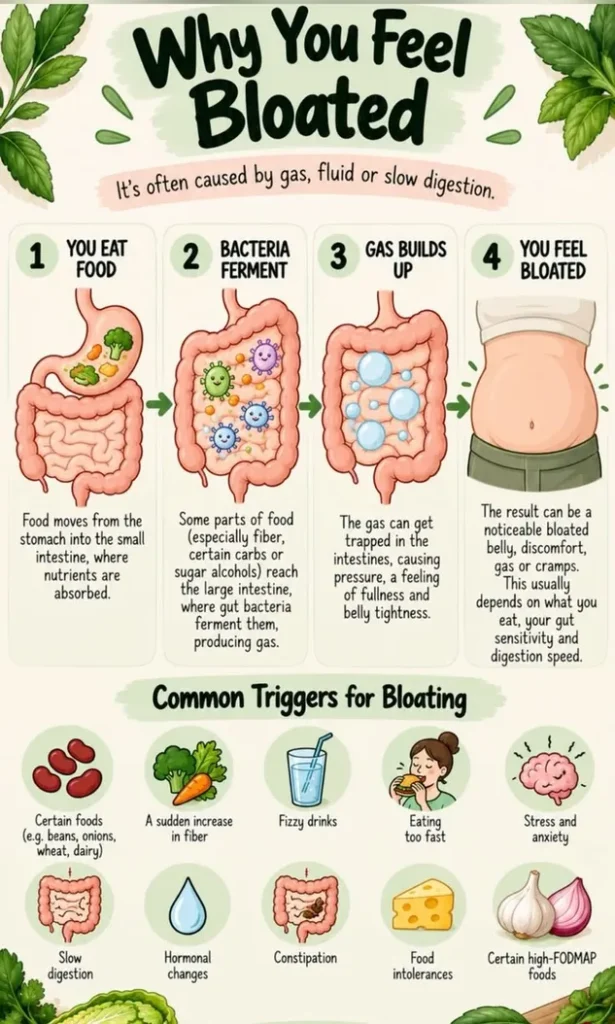
What’s Actually Happening in Your Gut
Bloating isn’t random. It follows a pretty predictable chain reaction.
- You Eat Food – Food moves from your stomach into your small intestine, where your body absorbs most of the nutrients.
- Bacteria Ferment– Some parts of that food, especially fiber, certain carbs, and sugar alcohols, don’t fully break down there. They travel on to your large intestine instead.
- Gas Builds Up- Once they arrive, your gut bacteria go to work fermenting them. That fermentation process produces gas as a natural byproduct.
- You Feel Bloated – If that gas builds up faster than your body can move it along, it gets trapped. That trapped gas creates pressure, fullness, and the tight, swollen feeling you know all too well.
Afternoon bloating often shows up worse simply because it takes a few hours after lunch for this whole process to reach the “gas buildup” stage.
10 Common Causes of Bloating
1. Certain Foods (Beans, Onions, Wheat, Dairy)
These foods contain compounds your gut bacteria ferment especially fast, which means more gas, more quickly, than other foods.
2. A Sudden Increase in Fiber
Fiber is genuinely good for you, but your gut bacteria need time to adjust. Ramping up fiber too fast overwhelms them and produces extra gas as they catch up.
3. Fizzy Drinks
Carbonated drinks introduce gas directly into your digestive system. That gas has to go somewhere, and often, it sits and expands before it does.
4. Eating Too Fast
Wolfing down lunch means swallowing extra air along with your food. That swallowed air adds directly to the gas already building up in your gut.
5. Stress and Anxiety
Your gut and brain are closely connected. Stress can slow digestion and change how your gut moves food along, both of which make bloating worse.
6. Slow Digestion
When food moves through your system more slowly than usual, bacteria get extra time to ferment it, which means extra time producing gas.
7. Hormonal Changes
Shifting hormones, especially around your cycle, can affect water retention and gut motility, making bloating feel worse at certain times of the month.
8. Constipation
When waste sits in your intestines longer than it should, gas builds up behind it with nowhere to go, which is why constipation and bloating so often show up together.
9. Food Intolerances
If your body struggles to break down something specific, like lactose or gluten, undigested particles reach your large intestine and ferment heavily, causing noticeably more gas than usual.
10. High-FODMAP Foods
FODMAPs are a specific group of fermentable carbs found in foods like Garlic, Onions, and certain fruits. They’re a well-documented, common trigger for bloating, especially in sensitive guts.
The Gut Reset Mistake That Makes Bloating Worse
Here’s something most people never hear: trying to “reset” your gut can actually backfire if you do it the wrong way.
A lot of people jump straight to restrictive diets, cutting out entire food groups overnight, or loading up on high-dose probiotics all at once, expecting quick relief.
Both moves can quietly cause more bloating, not less.
- Restrictive Diets can starve your gut bacteria of the fiber they need, disrupting your microbiome balance rather than fixing it.
- Probiotic overload can flood your gut with more bacteria than it’s ready to handle, leading to extra gas production while everything tries to rebalance.
- Add in Poor Sleep, ongoing Stress, and Dehydration, and you get a gut environment primed for inflammation, slower motility, and increased intestinal permeability, sometimes called “leaky gut.” All of that adds up to more bloating, not the relief you were hoping for.
The better approach is gradual, not extreme. Small, steady changes give your gut bacteria time to adjust instead of shocking the system.
Related: 10 Foods That Naturally Support Gut Health
Foods That Actually Soothe Bloating
Instead of extreme resets, these gentler options genuinely support your gut without overwhelming it.
- Bone Broth supports your gut lining directly, which can help calm irritation from the inside out.
- Fermented vegetables replenish beneficial bacteria gradually, rather than flooding your system all at once.
- Ginger and Turmeric are well known for helping reduce digestive inflammation.
- Peppermint Tea has a long-standing reputation for relieving bloating and easing digestive discomfort.
- Fiber-Rich Foods, added gradually, feed your good gut bacteria without overwhelming them.
- High-Quality Probiotics can help rebalance your microbiome, but starting with a lower dose and increasing slowly tends to work better than jumping straight to a high dose.
Habits help — but some people need one more piece. Here’s what that looks like.
For a lot of people, fixing meal pace, easing off high-FODMAP foods, and adding gentle gut-soothing foods is genuinely enough to see real improvement within a few weeks.
But if bloating sticks around despite those changes, it’s often a sign your gut bacteria need more targeted support, addressing dysbiosis, inflammation, or a slower gut transit time directly, rather than just adjusting your plate.
That’s usually the point where working with a doctor or gut-health specialist to identify what’s specifically going on makes more sense than continuing to guess.
Frequently Asked Questions
-
Why am I bloated every afternoon specifically?
Afternoon bloating often reflects the natural timeline of digestion. Food eaten at lunch typically reaches the gas-producing fermentation stage a few hours later, which lines up with that mid-to-late afternoon swelling many people notice.
-
Is bloating every day normal?
Occasional bloating is common and usually harmless. Daily bloating, especially if it’s severe or paired with pain, is worth mentioning to a doctor, since it can point to an underlying digestive issue that needs proper evaluation.
-
How fast can I fix bloating from food?
Simple triggers, like eating too fast or drinking something fizzy, usually ease up within a few hours. Bloating tied to fiber changes or gut bacteria imbalances typically takes one to two weeks of consistent adjustment to noticeably improve.
-
Can drinking more water help with bloating?
Yes. Dehydration can slow digestion and worsen constipation, both of which contribute directly to bloating. Staying well hydrated supports smoother, more regular digestion overall.
-
Should I avoid fiber if I’m bloated?
Not entirely. Cutting fiber completely can disrupt your gut bacteria balance. The better approach is usually increasing fiber gradually rather than removing it altogether.
The Real Reason Bloating Comes Back — Even When You’re Eating “Right”
Garlic on an empty stomach is a great start. Here’s the piece most people miss, explained in under 3 minutes.
 Video thumbnail — add later
2:41
Video thumbnail — add later
2:41
Free to watch · No sign-up required
This post contains an affiliate link. We may earn a commission if you make a purchase, at no extra cost to you. Statements have not been evaluated by the FDA. Not intended to diagnose, treat, cure, or prevent any disease. Consult your doctor about any digestive concerns.
The Bottom Line
Afternoon bloating almost always comes down to one of these 10 triggers, and rarely to just bad luck. Start by slowing down at meals, easing off major FODMAP triggers, and adding gentle gut-soothing foods before reaching for an extreme reset. If it persists despite consistent changes, that’s your cue to get a professional’s eyes on it.