

Managing diabetes is hard enough without spending hours trying to figure out what you can actually eat.
The good news? You don’t need an expensive special diet. A handful of affordable, everyday foods — backed by the American Diabetes Association (ADA) — can meaningfully support blood sugar control, protect your heart, help manage weight, and make eating with diabetes feel far less overwhelming.
Here are the top 12 diabetes superfoods, what they do, and how to use them starting today.
What Makes a Food a “Diabetes Superfood”?
Before we dive in, let’s be clear about one thing.
The word “superfood” is a marketing term — the FDA doesn’t officially define it. What the ADA calls “superstar foods” are foods that are nutrient-dense, affordable, and genuinely helpful for managing blood sugar, cholesterol, and overall metabolic health.
Every food on this list is:
- Rich in fiber, protein, healthy fats, vitamins, or antioxidants
- Low on the glycemic index or slow to raise blood sugar
- Evidence-backed for people living with diabetes
- Affordable and widely available
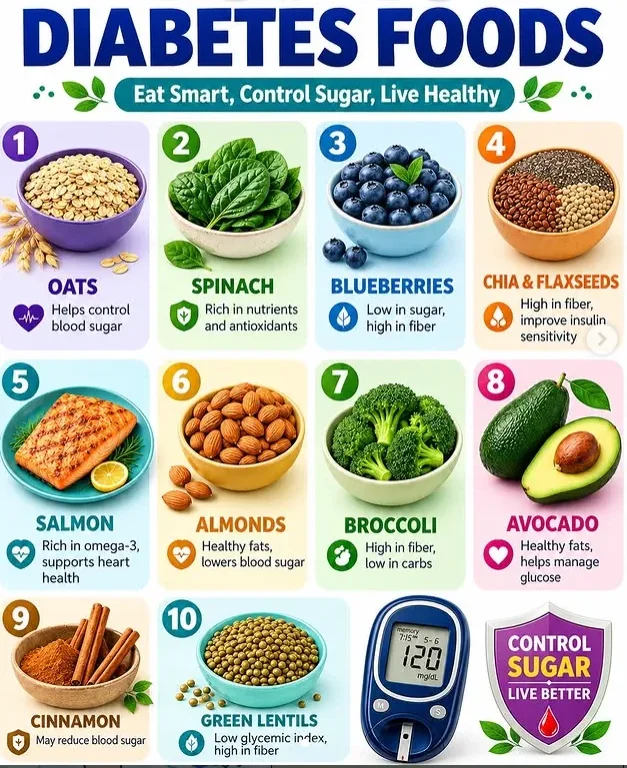
1. Oats — Helps Control Blood Sugar
Oats are one of the most blood-sugar-friendly grains you can eat.
Why they work: Oats contain beta-glucan, a soluble fiber that slows the digestion of carbohydrates and blunts the blood sugar spike after meals. The ADA lists whole grains — including oats — as a core carbohydrate choice for people with diabetes.
Stick with rolled oats or steel-cut oats. Instant oats are more processed and digest faster, which means a sharper blood sugar rise.
How to use them: A bowl of oats with cinnamon and blueberries at breakfast is one of the best blood-sugar-stable starts to your morning.
2. Spinach — Rich in Nutrients and Antioxidants
Dark leafy greens like spinach, kale, and collards are among the most nutrient-dense foods you can eat — and they have an almost negligible impact on blood sugar.
Why they work: Spinach is packed with vitamins A, C, K, folate, iron, calcium, and potassium. It’s low in both calories and carbohydrates, making it one of the safest foods to eat in generous quantities.
The ADA recommends filling half your plate with non-starchy vegetables at every meal. Spinach is the easiest way to hit that target.
How to use it: Add spinach to scrambled eggs, blend it into smoothies (it’s tasteless when blended), or toss it into soups and stews.
3. Blueberries — Low in Sugar, High in Fiber and Antioxidants
If you have diabetes and a sweet tooth, berries are your best friend.
Why they work: Blueberries are naturally sweet but low in sugar compared to most fruits. They’re packed with antioxidants, vitamins C and K, manganese, potassium, and fiber — all of which support metabolic health and reduce inflammation.
Chronic inflammation is closely linked to insulin resistance, which is why antioxidant-rich foods are especially important for people with type 2 diabetes.
How to use them: Top plain Greek yogurt with blueberries for a protein-and-antioxidant breakfast. Or add them to oatmeal for a naturally sweet, blood-sugar-friendly combination.
4. Chia Seeds and Flaxseeds — High Fiber, Improve Insulin Sensitivity
These tiny seeds pack an impressive nutritional punch.
Why they work: Both chia seeds and flaxseeds are exceptionally high in fiber — which slows glucose absorption — and omega-3 fatty acids, which reduce inflammation and support heart health. Flaxseeds are also one of the richest dietary sources of lignans, plant compounds linked to improved insulin sensitivity.
The ADA notes that nuts and seeds — including flax — are excellent sources of healthy fats, magnesium, and fiber for people with diabetes.
How to use them: Add ground flaxseed to oatmeal, yogurt, or smoothies. Mix chia seeds into water or milk overnight for an easy chia pudding that keeps you full for hours.
5. Salmon — Rich in Omega-3, Supports Heart Health
People with diabetes face a significantly higher risk of heart disease. Fatty fish like salmon directly address that risk.
Why it works: Salmon is high in EPA and DHA omega-3 fatty acids, which reduce triglycerides, lower inflammation, and support heart health. The ADA’s Nutrition Consensus Report explicitly recommends eating fatty fish — including salmon, herring, sardines, mackerel, and trout — at least twice per week for people with diabetes.
Salmon also contains no carbohydrates, making it ideal for blood sugar management.
How to use it: Bake, grill, or broil salmon. Avoid breaded or fried preparations, which add unnecessary carbohydrates and calories.
6. Almonds — Healthy Fats, Lower Blood Sugar
A small handful of almonds can do a lot for blood sugar control.
Why they work: Almonds contain healthy monounsaturated fats, magnesium, and fiber. Magnesium plays a direct role in insulin function — and research consistently shows that people with type 2 diabetes tend to have lower magnesium levels than healthy controls. Getting it through food rather than supplements is the most effective approach.
The ADA recommends nuts as a quality protein and fat source that helps manage hunger between meals without spiking blood sugar.
How to use them: A small handful (about 1 oz or 23 almonds) makes an ideal snack. Try roasting your own with spices to control sodium content.
7. Broccoli — High in Fiber, Low in Carbs
Broccoli is one of the most versatile and reliably healthy vegetables for people with diabetes.
Why it works: Broccoli is high in fiber and very low in digestible carbohydrates. It contains sulforaphane, a compound shown in research to improve insulin sensitivity and reduce blood glucose levels. It’s also rich in vitamin C and chromium — a mineral that plays a role in glucose metabolism.
How to use it: Steam, roast, or stir-fry broccoli as a side dish. It works equally well raw with hummus as a snack. Don’t overcook it — light steaming preserves the sulforaphane content best.
8. Avocado — Healthy Fats, Helps Manage Glucose
Avocado might be the most complete single food for people with diabetes.
Why it works: Avocados are rich in monounsaturated fats, fiber, potassium, and fat-soluble vitamins (A, D, E, and K). The healthy fats slow glucose absorption from other foods eaten at the same meal — which means adding avocado to a meal naturally reduces its overall glycemic impact.
The ADA highlights avocado as an important source of both heart-healthy fat and fiber for the Diabetes Plate.
How to use it: Add sliced avocado to salads, eggs, or whole grain toast. Mash it as a spread instead of butter or cream cheese.
9. Cinnamon — May Reduce Blood Sugar
Cinnamon deserves its reputation in diabetes circles — but with an honest caveat.
Why it works: Multiple studies suggest that cinnamon may help lower fasting blood sugar levels and improve insulin sensitivity. The compounds in cinnamon appear to mimic insulin and increase glucose uptake by cells. However, the evidence is promising rather than conclusive — cinnamon should support your diet, not replace medication.
How to use it: Add cinnamon to oatmeal, Greek yogurt, smoothies, or your morning coffee. Ceylon cinnamon (rather than Cassia) is preferred for daily use, as high doses of Cassia cinnamon contain coumarin, which can be harmful in large amounts.
10. Green Lentils — Low Glycemic Index, High in Fiber
Green lentils are one of the best carbohydrate choices available to people with diabetes.
Why they work: Lentils have a very low glycemic index — meaning they digest slowly and produce a gradual, manageable rise in blood sugar rather than a sharp spike. They are also exceptionally high in protein, fiber, iron, folate, and potassium. The ADA recommends beans, peas, and legumes — including lentils — as plant-based protein superstars.
How to use them: Add lentils to soups, stews, and salads. Cook them from scratch for the most affordable, sodium-controlled option.
11. Beans and Legumes — Protein, Fiber, and Blood Sugar Control
Kidney beans, black beans, chickpeas, pinto beans — these are among the most diabetes-friendly foods available, and among the most affordable.
Why they work: Half a cup of beans provides as much protein as an ounce of meat — without the saturated fat. They’re also high in fiber, folate, potassium, iron, and zinc. The fiber content specifically slows carbohydrate digestion and blunts blood sugar response significantly.
How to use them: Use canned beans for convenience — just drain and rinse them thoroughly to reduce sodium. Add to salads, soups, stews, or make simple bean patties.
12. Plain Greek Yogurt — Protein, Calcium, and Gut Health
Not all dairy is equal for people with diabetes — but plain, low-fat Greek yogurt is genuinely excellent.
Why it works: Greek yogurt is high in protein (which slows glucose absorption), contains probiotics that support gut health and may improve insulin sensitivity, and provides calcium and vitamin D. The key word is plain — flavored yogurts often contain significant added sugar that can spike blood sugar quickly.
How to use it: Top plain Greek yogurt with blueberries, a sprinkle of flaxseed, and a few walnuts. This combination provides protein, healthy fat, antioxidants, and fiber in a single meal.
How Diabetes Affects Weight — And Why These Foods Help
Many people with diabetes — particularly type 2 — struggle with weight management in both directions.
Unexplained weight loss can occur when insulin deficiency prevents cells from using glucose properly, forcing the body to burn fat and muscle for fuel instead. This is common in early or unmanaged type 1 diabetes.
Weight gain is also common, particularly in type 2 diabetes, driven by insulin resistance, medication side effects, hormonal changes, and metabolic slowdown.
The foods on this list help both situations. They:
- Stabilize blood sugar — reducing the hormonal chaos that drives both weight loss and weight gain
- Provide sustained energy — protein and fiber keep you full longer, reducing overeating
- Reduce inflammation — chronic inflammation worsens insulin resistance and metabolic health
- Support heart health — cardiovascular disease is the leading complication of diabetes
Eating these foods consistently — as part of a structured meal plan — creates the stable metabolic environment that makes weight management and blood sugar control far more achievable.
How to Build Your Diabetes Plate
The ADA’s Diabetes Plate Method is a simple, practical guide:
- Half your plate — non-starchy vegetables (spinach, broccoli, avocado)
- One quarter — lean protein (salmon, eggs, beans, Greek yogurt, almonds)
- One quarter — quality carbohydrates (oats, lentils, blueberries, whole grains)
Follow this structure at each meal and you naturally control portions, carbohydrate load, and blood sugar without complicated calorie counting.
Eating Well with Diabetes on a Budget
Healthy eating for diabetes doesn’t have to be expensive. Here’s how to keep costs down:
- Buy dry beans and lentils — far cheaper than canned, and you control the sodium
- Choose frozen vegetables and fruit — nutritionally equivalent to fresh, often cheaper
- Buy canned fish — sardines, tuna, and salmon in cans are affordable and just as nutritious
- Buy seasonal produce — in-season spinach, broccoli, and blueberries cost significantly less
- Rinse canned vegetables — removes up to 40% of added sodium at no extra cost
FAQ
-
What is the best food to eat if you have diabetes?
There is no single “best” food — but non-starchy vegetables like spinach and broccoli, fatty fish like salmon, legumes like lentils and beans, and berries consistently rank as the most beneficial across multiple evidence-based guidelines, including those from the American Diabetes Association. The best eating pattern is one that stabilises blood sugar, reduces inflammation, and is sustainable for you long-term.
-
Can diabetics eat fruit?
Yes — but choice and portion matter. Berries (blueberries, strawberries, raspberries) are among the best fruit choices for people with diabetes because they are naturally lower in sugar and high in fiber and antioxidants. Citrus fruits are also a good option. Whole fruit is always preferable to juice — the fiber in whole fruit slows glucose absorption significantly.
-
What foods should diabetics avoid?
The foods most consistently linked to poor blood sugar control include: sugary beverages (soda, fruit juice, sweetened coffee drinks), refined carbohydrates (white bread, white rice, pastries), processed snack foods, fried foods, and foods high in saturated fat. These foods cause rapid blood sugar spikes and increase inflammation and cardiovascular risk over time.
-
Do these superfoods replace diabetes medication?
No. Diet and nutrition are powerful tools for managing diabetes, but they work alongside — not instead of — prescribed medication and medical treatment. Any changes to your diet should be discussed with your healthcare provider, particularly if you take insulin or blood-sugar-lowering medications, as improved diet can affect medication dosing requirements.
-
How quickly can diet changes affect blood sugar?
Blood sugar responds to diet very quickly — within hours of a meal in the short term, and within 2–4 weeks in terms of measurable changes to fasting blood glucose levels and A1C with consistent dietary improvements. Most people who shift to a diabetes-friendly eating pattern report noticeably more stable energy and fewer blood sugar spikes within the first 1–2 weeks.
-
Is cinnamon actually good for diabetes?
The evidence is promising. Multiple studies suggest cinnamon may support lower fasting blood sugar and improved insulin sensitivity — but the effect sizes are modest and the research is not yet conclusive enough for cinnamon to be recommended as a treatment. Use it as a flavourful, zero-sugar addition to meals rather than a supplement strategy, and never as a replacement for prescribed medication.
Ever Wonder Why Your Blood Sugar Still Swings — Even When You’re “Doing Everything Right”?
A closer look at a natural approach some people are pairing with their normal routine, explained in under 3 minutes.
 Video thumbnail — add later
2:58
Watch the Full Explanation →
Video thumbnail — add later
2:58
Watch the Full Explanation →
60-day money-back guarantee · Free to watch
This post contains an affiliate link. We may earn a commission if you make a purchase, at no extra cost to you.
Conclusion — Start With What’s Already in Your Kitchen
You don’t need to overhaul your entire diet overnight.
Pick two or three foods from this list that you already enjoy and make them a regular part of your meals this week. Add spinach to your eggs. Swap white rice for lentils once. Top your yogurt with blueberries instead of sugar.
Small, consistent changes compound. Over weeks and months, they make a real, measurable difference to your blood sugar, your weight, and your energy levels.
The 12 superfoods on this list are affordable, widely available, and genuinely effective. The American Diabetes Association recommends them for a reason — and the research backs them up.
Which of these 12 diabetes superfoods do you already eat regularly? Drop it in the comments — and share which one surprised you most.
Sources:
- American Diabetes Association. Superstar Foods for Diabetes. diabetes.org
- American Diabetes Association. Nutrition Consensus Report. Diabetes Care, 2019.
- American Diabetes Association. Diabetes Plate Method. diabetesfoodhub.org
Really enjoyed this post. Thanks for sharing such helpful info. If you want a science‑based breakfast tool, this one has been super helpful for me: