
You’re tired, and not just “long week” tired. You feel flat. Your drive is low, your mood is off, and your body doesn’t respond the way it used to.
So what’s going on? Age? Stress? Your hormones?
Here’s the tricky part. The signs of low testosterone are real, but most of them show up in other health problems too. That’s why guessing doesn’t work.
This guide covers 5 common signs, what else can look like low T, and how to know if you have low testosterone for sure. You’ll also get a checklist you can take to your doctor.
What Low T Actually Means
Testosterone is the main male sex hormone. It helps drive your sex drive, muscle, bone strength, and energy. Low testosterone, often called “low T,” means your body isn’t making enough of it.
When low levels cause real symptoms, doctors may call it Hypogonadism. You’ll also hear the term Testosterone Deficiency.
What Is a Normal Testosterone Level?
Doctors measure testosterone in nanograms per deciliter, written as ng/dL. The cutoff for “low” isn’t the same everywhere. It changes by lab and by guideline.
One hospital article, from the Hospital of Central Connecticut, uses 250 ng/dL as the line. Many medical guidelines use about 300 ng/dL. Your level also rises and falls through the day, and it’s usually highest in the morning.
That’s why a single number never tells the whole story. Doctors look at your symptoms and your test results together.
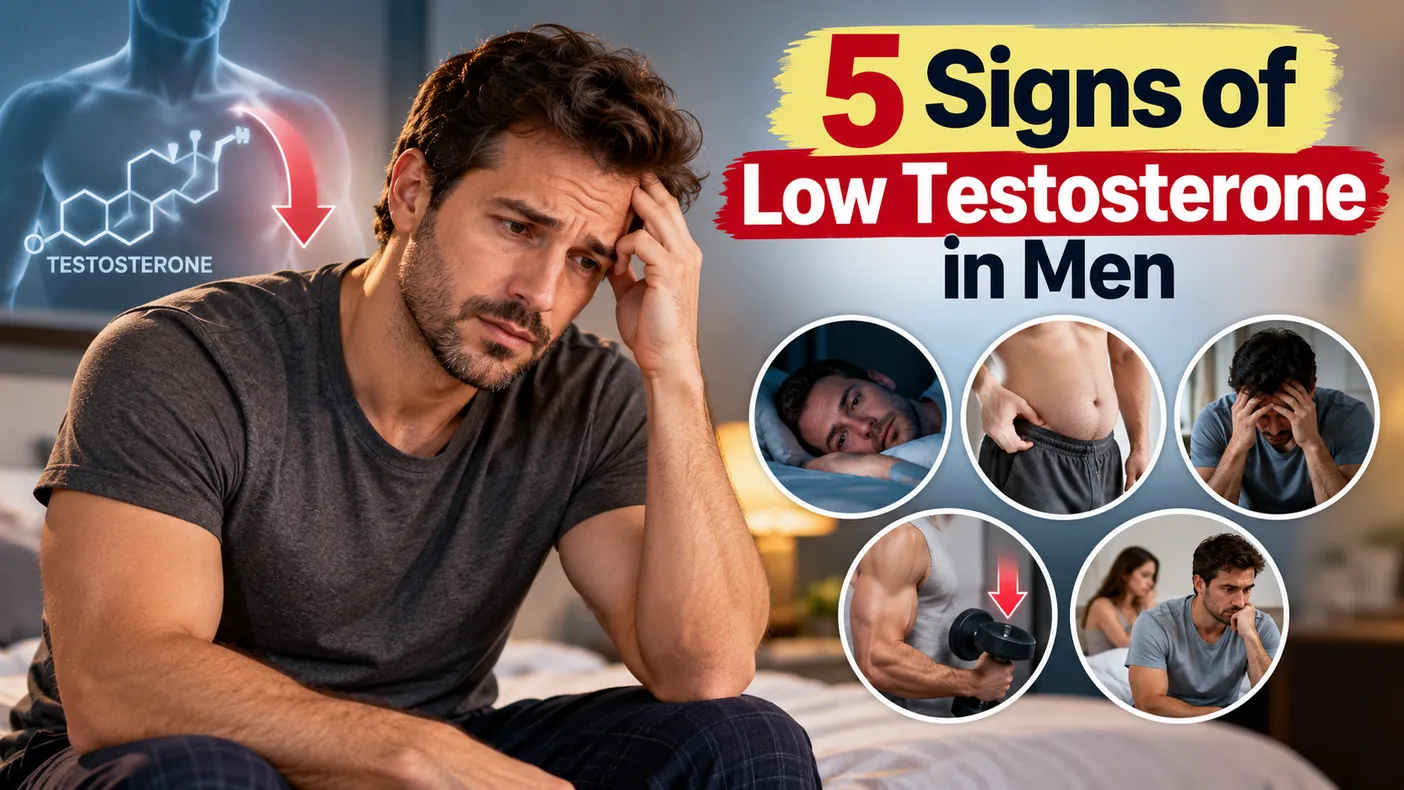
5 Signs of Low Testosterone in Men
None of these signs proves you have low T. Think of them as clues, not a diagnosis.
1. Erection Problems
Testosterone supports your sex drive and helps your body respond. When levels drop, some men notice weaker or less frequent erections.
Read: Root Causes of Erectile Dysfunction
Keep in mind: Low T is only one possible cause. Blood flow problems, diabetes, stress, and some medicines can cause erection trouble too. It can sometimes be an early warning for heart or blood vessel issues, so it’s worth seeing a doctor either way.
2. More Body Fat
You might notice extra weight around your belly, even if your habits haven’t changed. Some men also lose muscle or strength, and some notice softer or larger breast tissue.
The link goes both ways. Low testosterone can make it easier to gain fat, and extra fat can lower testosterone further.
Keep in mind: Weight gain has many causes. Sleep, stress, food, and age all play a part.
3. Mood Changes
Testosterone affects your mood and motivation. Low levels may show up as irritability, low mood, less drive, or trouble focusing.
Keep in mind: Depression and stress cause the same feelings, so don’t assume it’s hormones. If your low mood feels heavy, or you have thoughts of harming yourself, reach out to a doctor or a local crisis line right away.
4. Loss of Body and Facial Hair
Your beard may grow in patchier. Hair on your chest, arms, or legs may thin out. This tends to happen slowly.
Keep in mind: This isn’t the same as the usual scalp balding most men get, which is mostly genetic. Hair also thins naturally with age.
5. Sleep Trouble
Low testosterone has been linked to trouble sleeping, including Insomnia and sleep apnea. Sleep apnea is a condition where your breathing stops and starts during the night.
It works in both directions. Poor sleep can lower testosterone, and low testosterone can make sleep worse.
Keep in mind: Loud snoring, gasping, or waking up exhausted can point to sleep apnea. That needs its own check, and treating it matters.
Related: 8 Ways to Boost Testosterone Naturally in Men (What Actually Works)
Other Low T Symptoms Worth Knowing
The list above isn’t complete. Other low T symptoms men report include:
- Low sex drive (one of the most common)
- Constant tiredness, even after a full night’s sleep
- Losing muscle or strength
- Trouble concentrating
If you notice several of these together, and they last for weeks or months, take it seriously.
Could It Be Something Else?
This is the most important question on this page. Many conditions look a lot like low T. Several can also exist at the same time.
| Condition | What it can look like | A clue it may not be low T |
|---|---|---|
| Chronic stress | Tiredness, low drive, poor sleep, mood swings | Symptoms ease when stress eases |
| Sleep apnea | Low energy, daytime sleepiness, low drive | Loud snoring, gasping or choking at night |
| Depression | Low mood, low energy, loss of interest | Feelings of hopelessness or guilt lead the picture |
| Thyroid problems | Tiredness, weight gain, low drive | Feeling cold, dry skin, constipation |
| Medicines | Low drive, erection trouble, fatigue | Symptoms began after starting a new medicine |
This table is a starting point, not a test. Only your doctor can sort out which one fits.
Common Causes of Low Testosterone
Causes of low testosterone range from everyday habits to medical conditions. The most common include:
- Aging: Levels tend to drift down slowly as men get older.
- Extra body fat: Obesity is strongly linked to lower testosterone.
- Long-term stress: High cortisol can work against testosterone.
- Heavy alcohol use: It can lower testosterone and wreck your sleep.
- Poor sleep and sleep apnea: Short or broken sleep cuts your body’s production time.
- Cancer treatment: Chemotherapy and radiation can affect the testicles.
- Medicines and steroid use: Some pain medicines, hair loss drugs, and anabolic steroids can lower natural production.
- Hypogonadism: In primary hypogonadism, the testicles don’t work properly. In secondary hypogonadism, the brain signals that tell the testicles to make testosterone are off.
Can Stress Cause Low Testosterone?
It can contribute. When you’re stressed, your body releases cortisol, and cortisol and testosterone tend to pull in opposite directions.
Stress is rarely the whole story, though. It usually works together with poor sleep, extra weight, or a busy life that leaves no time to recover. The research is also not as strong as it is for weight and sleep.
How to Know If You Have Low Testosterone: The Blood Test
The only way to know for sure is a low testosterone blood test. Symptoms alone can’t confirm it.
Here’s what usually happens:
- You talk with your doctor. They’ll ask about your symptoms, health history, medicines, and sleep.
- You get a blood test. It’s usually done in the morning, when testosterone is highest.
- You may repeat it. Levels bounce around, so doctors often confirm a low result with a second test on another day.
- Your doctor looks for a cause. They may order other tests, depending on your results.
Ask the clinic how to prepare for the test. If you try an at-home kit, take the result to your doctor to confirm it.
What Happens If Your Level Is Low
A low result isn’t the end of the road. It’s a starting point.
Your doctor will usually begin by looking for a cause and treating it. That might mean checking for sleep apnea, reviewing your medicines, or managing a health condition.
Lifestyle changes often come first. Better sleep, strength training, a healthier weight, and less alcohol can help many men, especially when weight or sleep is part of the problem.
If your level is truly low and your symptoms stay, your doctor may talk with you about testosterone replacement therapy. It comes as a gel, patch, or injection. It’s a medical decision with trade-offs, including possible effects on fertility, and it needs regular check-ups. It isn’t a quick fix, and it isn’t right for everyone.
Related: Do Testosterone Boosters Work? What Doctors Say About Supplements, DHEA, and Steroids
Bring This to Your Doctor: A Screenshot-Friendly Checklist
Appointments go fast. Screenshot this list and fill it in before you go.
1. What I’m noticing (check all that apply)
- ☐ Low sex drive
- ☐ Erection problems
- ☐ Constant tiredness
- ☐ Low mood or irritability
- ☐ More belly fat or less muscle
- ☐ Thinning body or facial hair
- ☐ Trouble sleeping or loud snoring
- ☐ Trouble focusing
2. How long it’s been going on: ____ weeks / months / years
3. Medicines and supplements I take: Include pain medicines, hair loss pills, steroids, and any “testosterone boosters.”
4. My health history: Cancer treatment, injury to the testicles, diabetes, sleep apnea, thyroid problems, heart problems.
5. My habits: Hours of sleep, drinks per week, exercise, and stress level.
6. Questions to ask:
- Should I get a morning testosterone blood test?
- Should the test be repeated to confirm it?
- Could sleep apnea, my medicines, or another condition explain this?
- What can I do with lifestyle changes first?
- If my level is low, what are my options and risks?
FAQ
-
How do I know if I have low testosterone?
Symptoms can give you clues, but only a blood test can confirm it. Talk to your doctor if you notice several signs that last for weeks or months.
-
What is a normal testosterone level?
It depends on the lab. A common range for adult men is roughly 300 to 1,000 ng/dL, but cutoffs for “low” vary. One hospital article uses 250 ng/dL, and many guidelines use about 300. Your doctor will read your number alongside your symptoms.
-
Can stress cause low testosterone?
Long-term stress can contribute, mainly through cortisol. It usually works alongside other factors like poor sleep and extra weight.
-
Can young men have low testosterone?
Yes. It’s more common with age, but younger men can have it too, often due to obesity, certain medical conditions, medicines, or injury.
-
Can low testosterone be fixed naturally?
Sometimes. When weight, sleep, or inactivity is part of the cause, lifestyle changes can help. Medical causes need a doctor’s care.
The Bottom Line
The signs of low testosterone are worth paying attention to, but they’re not worth panicking over. They’re common, and they overlap with stress, sleep problems, and other conditions.
The only way to know is a blood test and a conversation with your doctor. Use the checklist above, and in the meantime, protect your sleep and your weight.
Which sign made you search for this today?
Sources
- The Hospital of Central Connecticut: 5 Signs of Low Testosterone, 5 Ways to Boost Your ‘T’ Naturally
- University of Utah Health: Lifestyle Changes That Can Increase Testosterone Levels in Older Men
- Air Force Medical Service: Boosting Testosterone the Natural Way Is Better (and Legal)
- American Urological Association guideline on testosterone deficiency
This article is for general information only and isn’t medical advice. Only a healthcare provider can diagnose low testosterone. Talk to your doctor before starting any treatment or supplement, especially if you have a health condition or take medication.