
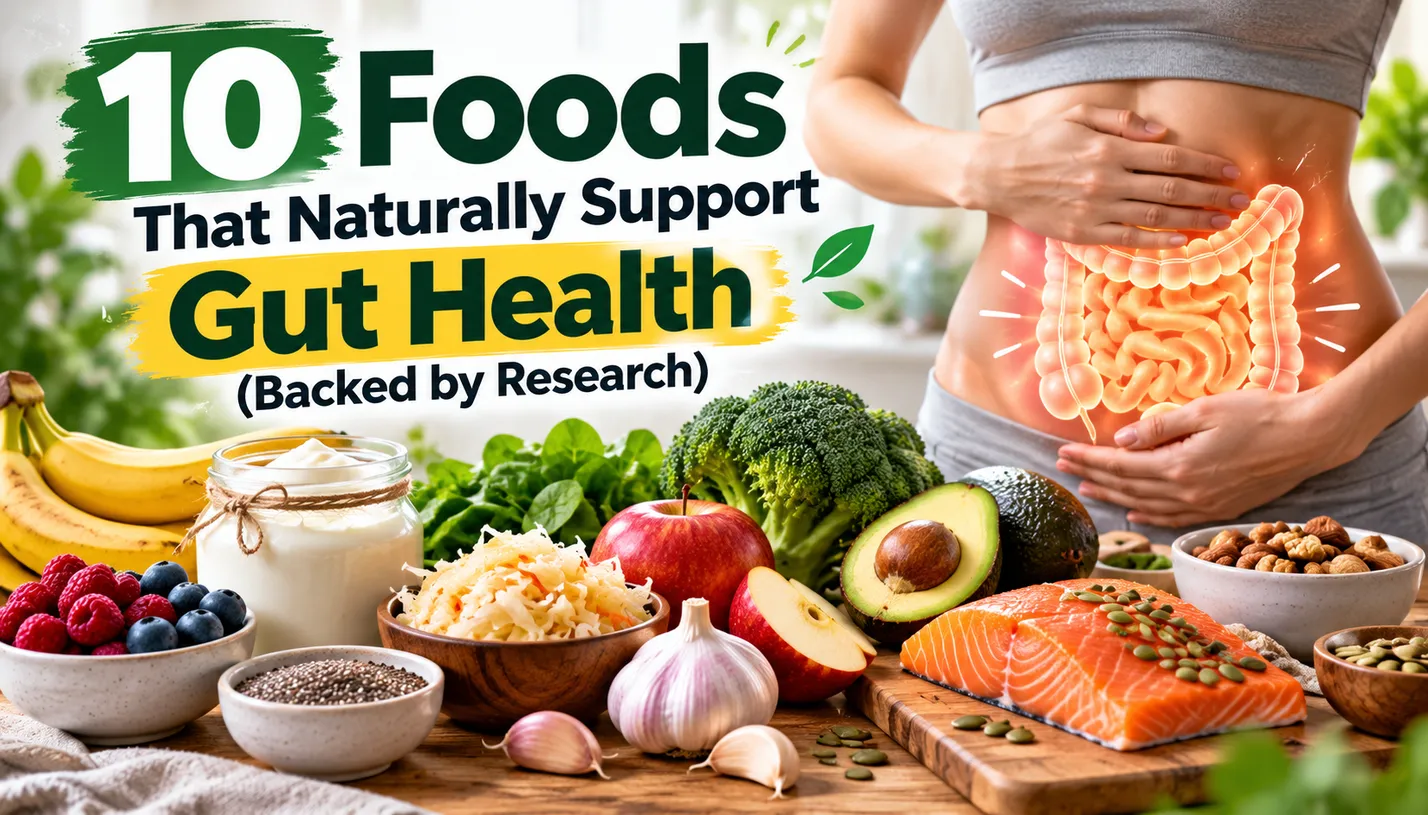
Your gut doesn’t send you a polite warning before things go wrong. It just starts acting up, bloating after meals, unpredictable energy, that heavy, “something’s off” feeling you can’t quite explain.
Here’s the good news. What you eat has a direct, measurable effect on your gut lining and the bacteria living inside it.
You don’t need an expensive supplement stack to start feeling better. You need the right foods, used consistently.
Why Your Gut Reacts the Way It Does
Your digestive tract is lined with cells that form a protective barrier, sometimes called your gut lining.
When that barrier gets irritated, from stress, poor sleep, processed food, or illness, it can trigger inflammation and uncomfortable symptoms.
The foods below work in one of two ways. Some soothe and protect the gut lining directly. Others feed the beneficial bacteria that keep your whole digestive system balanced.
10 Foods That Naturally Support Gut Health
1. Bananas
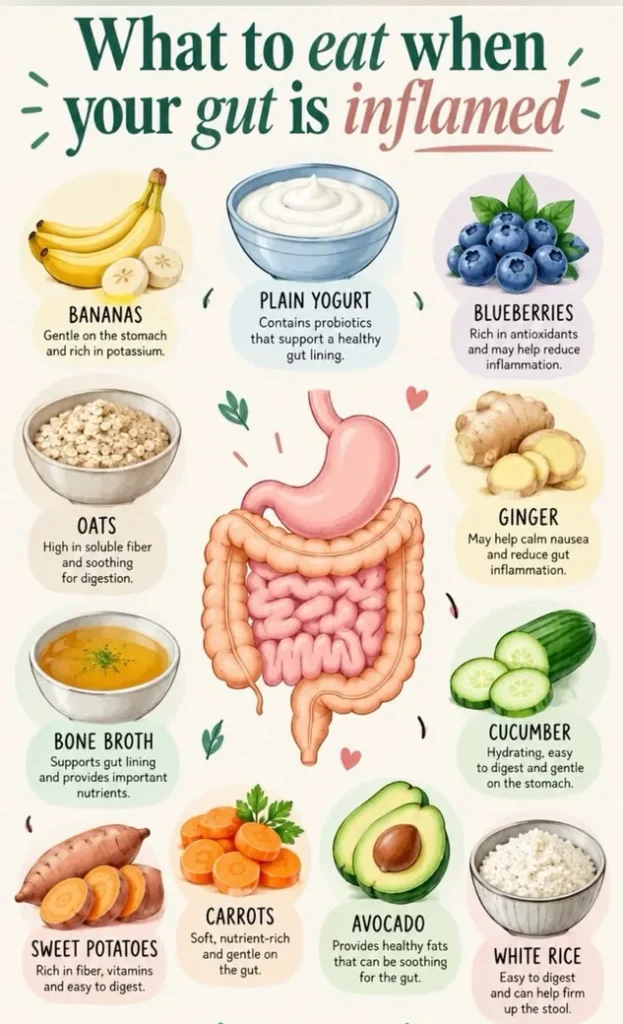
Bananas are gentle on the stomach, which is exactly why they show up in almost every “sick day” food list.
They’re also rich in potassium, an electrolyte your body loses quickly during digestive upset.
2. Plain Yogurt
Plain yogurt contains live probiotics, the beneficial bacteria that directly support a healthy gut lining.
Stick with plain, unsweetened varieties. Added sugar can feed the wrong kind of bacteria and undo some of the benefit.
3. Blueberries
Blueberries are packed with antioxidants, plant compounds that may help calm inflammation throughout your digestive tract.
Their fiber content also gives your gut bacteria something useful to feed on.
4. Oats
Oats are high in soluble fiber, a type of fiber that turns gel-like in your gut and helps soothe irritation as food moves through.
This same fiber slows digestion slightly, which can ease that uncomfortable “too fast, too much” feeling after meals.
5. Ginger
Ginger has a long-standing reputation for calming nausea, and it may also help reduce gut inflammation.
A warm cup of ginger tea after a heavy meal is a simple, low-effort way to use it.
6. Bone Broth
Bone broth supports the gut lining and provides nutrients like collagen and amino acids that your digestive system can put to direct use.
Sipping it warm, especially during a flare-up, tends to feel more soothing than eating solid food.
7. Cucumber
Cucumber is mostly water, which makes it naturally hydrating and easy to digest.
Its gentle, mild profile makes it one of the safer raw vegetables when your gut is already feeling sensitive.
8. Sweet Potatoes
Sweet potatoes are rich in fiber and vitamins, yet they’re soft and easy to digest once cooked.
They’re a solid substitute when your gut needs something more substantial than broth, but you’re not ready for heavier meals.
9. Carrots
Carrots are soft, nutrient-rich, and gentle on the gut, especially when cooked until tender.
Steamed or roasted carrots are easier to break down than raw ones if your digestion is already under stress.
10. Avocado
Avocado provides healthy fats that can be genuinely soothing for the gut, along with fiber that supports regularity.
It’s an easy add-on to toast, salads, or a bland recovery meal when you want something more filling.
A Bonus Worth Knowing
If you’re rebuilding your diet after a rough digestive stretch, white rice deserves a mention too. It’s easy to digest and can help firm up loose stools, making it a practical bridge food while your gut settles back to normal.
Related: How to get clear and glowing skin at home naturally?
How to Actually Use These Foods
Eating one gut-friendly food occasionally won’t undo months of stress or poor habits. Consistency is what actually moves the needle.
- Start your day with oats or yogurt instead of something sugary.
- Add ginger tea after heavier meals, especially if bloating tends to hit afterward.
- Keep cucumber, carrots, and avocado on hand as easy, gut-gentle snacks.
- Lean on bone broth and white rice specifically during flare-ups, not as everyday staples.
When Food Alone Isn’t Enough
These foods genuinely help support a healthy gut, but they’re not a cure for underlying digestive conditions like IBS, IBD, or chronic gut inflammation.
If your symptoms are frequent, severe, or getting worse despite dietary changes, it’s worth talking to a doctor or registered dietitian rather than managing it through food alone.
The Real Reason Bloating Comes Back — Even When You’re Eating “Right”
Garlic on an empty stomach is a great start. Here’s the piece most people miss, explained in under 3 minutes.
 Video thumbnail — add later
2:41
Video thumbnail — add later
2:41
Free to watch · No sign-up required
This post contains an affiliate link. We may earn a commission if you make a purchase, at no extra cost to you. Statements have not been evaluated by the FDA. Not intended to diagnose, treat, cure, or prevent any disease. Consult your doctor about any digestive concerns.
Frequently Asked Questions
-
How long does it take to see gut health improvements from diet?
Many people notice small changes, like less bloating, within one to two weeks of consistent changes. Deeper improvements to gut bacteria balance often take four to eight weeks.
-
Can I eat these foods every day?
Yes, most of these foods are safe for daily use. Bone broth and white rice are best used more situationally, especially during flare-ups, rather than as a daily staple for everyone.
-
Do I need probiotic supplements if I eat yogurt regularly?
Not necessarily. Plain yogurt with live cultures already provides beneficial bacteria for many people. Supplements may help in specific cases, but that’s worth discussing with a healthcare provider first.
-
What foods should I avoid if my gut is inflamed?
While this article focuses on what to add, it generally helps to limit fried foods, excess sugar, and highly processed snacks during a flare-up, since these tend to aggravate gut inflammation rather than calm it.
The Bottom Line
Your gut responds directly to what you feed it, and small, consistent changes tend to beat drastic overhauls. Start with two or three foods from this list, build the habit, and let your gut do the rest.