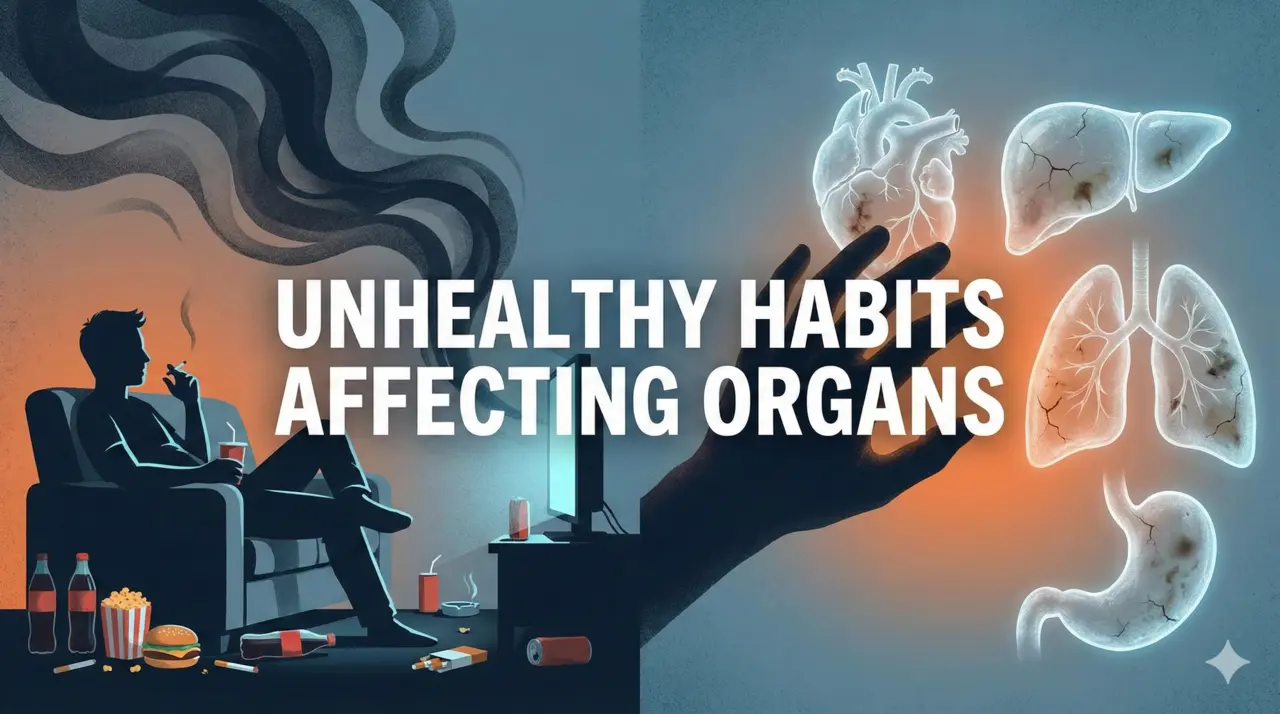

Our body speaks to us every day—through fatigue, discomfort, mood changes, and digestion issues. Most of the time, these signs are ignored. The image you shared highlights an important truth: our organs react strongly to certain daily habits, many of which feel normal or harmless.
This article explains what each major organ “fears,” why these habits cause harm, and how small changes can protect long-term health. The aim is awareness, not fear. When you understand how your body responds, better choices become easier.
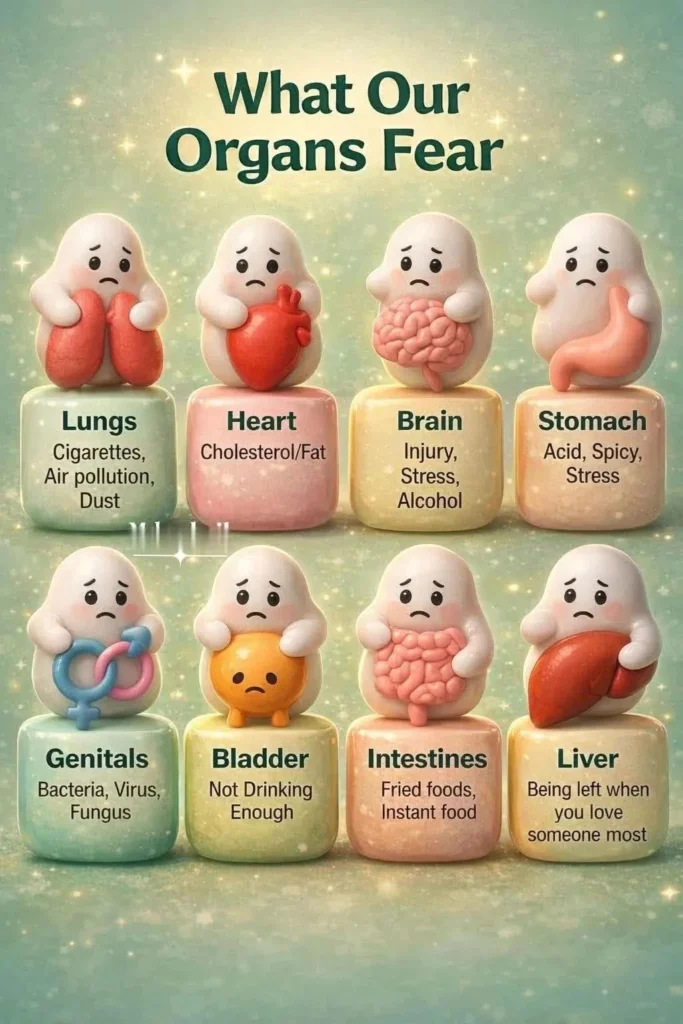
Lungs: Cigarettes, Air Pollution, and Dust
The lungs are designed to bring oxygen into the body and remove carbon dioxide. When exposed repeatedly to smoke, pollution, or dust, this balance breaks down.
Why lungs suffer:
- Cigarette smoke damages air sacs
- Pollution triggers inflammation
- Dust irritates airways
Over time, these exposures increase the risk of asthma, chronic bronchitis, and reduced lung capacity.
What helps:
Avoid smoking, improve indoor air quality, wear masks in dusty environments, and spend time in clean outdoor air when possible.
Heart: Excess Cholesterol and Fat
The heart pumps blood nonstop. Diets high in unhealthy fats and cholesterol increase plaque buildup in blood vessels, making the heart work harder.
Health impact:
- Narrowed arteries
- High blood pressure
- Increased risk of heart disease
Read More: Can Lack of Sleep Cause a Heart Attack? Science Explains the Connection
Fat itself is not the enemy—excess processed and trans fats are.
What helps:
Choose healthy fats (nuts, seeds, olive oil), eat fiber-rich foods, and stay physically active.
Brain: Injury, Stress, and Alcohol
The brain controls thoughts, emotions, and body functions. Chronic stress and excessive alcohol disrupt brain chemistry and neural connections.
Why the brain struggles:
- Stress raises cortisol, harming memory
- Alcohol damages nerve cells
- Head injuries affect long-term cognition
Mental overload also affects sleep, focus, and emotional balance.
What helps:
Manage stress, limit alcohol intake, protect your head, and allow time for rest and mental recovery.
Stomach: Acidic, Spicy Foods and Stress
The stomach uses acid to digest food, but excess acid—especially under stress—can damage the stomach lining.
Common effects:
- Acid reflux
- Gastritis
- Stomach pain or burning
Stress worsens digestion by altering acid production.
What helps:
Eat slowly, reduce overly spicy or acidic foods, manage stress, and avoid lying down immediately after meals.
Genitals: Bacteria, Viruses, and Fungal Infections
The reproductive system relies on balance. Poor hygiene, unsafe sexual practices, or weakened immunity increase infection risk.
Risks include:
- Bacterial infections
- Viral transmission
- Fungal overgrowth
These issues can affect fertility, comfort, and overall health.
What helps:
Practice good hygiene, safe sex, and seek medical advice for persistent symptoms.
Bladder: Not Drinking Enough Water
The bladder stores urine, helping remove waste from the body. Low water intake concentrates urine and irritates the bladder lining.
Effects of dehydration:
- Urinary tract infections
- Bladder irritation
- Kidney strain
What helps:
Drink water consistently throughout the day, not only when thirsty.
Intestines: Fried and Instant Foods
The intestines absorb nutrients and support immunity. Highly processed foods slow digestion and disrupt gut bacteria.
Why intestines suffer:
- Low fiber intake
- High inflammation
- Poor nutrient absorption
This leads to bloating, constipation, and digestive discomfort.
What helps:
Eat whole foods, include fiber daily, and limit fried and instant meals.
Liver: Emotional Stress and Processed Foods
The liver filters toxins, processes nutrients, and supports metabolism. Poor diet and emotional stress increase liver workload.
Why the liver struggles:
- Excess sugar and processed food
- Alcohol overload
- Chronic emotional stress
Interestingly, emotional pain affects hormonal balance, indirectly impacting liver function.
What helps:
Eat balanced meals, limit alcohol, manage stress, and prioritize emotional well-being.
The Bigger Picture: Why These Habits Matter Together
Each organ works as part of a system. When one suffers, others compensate—until they can’t.
Common patterns:
- Poor diet affects heart, liver, and intestines
- Stress affects brain, stomach, and immunity
- Dehydration affects bladder, digestion, and circulation
Health problems rarely start in isolation. They develop through repeated daily habits.
Simple Changes That Protect Your Organs
You don’t need extreme routines. Small steps work best.
- Drink enough water
- Eat mostly whole foods
- Move your body daily
- Reduce stress where possible
- Avoid smoking and excess alcohol
- Get adequate sleep
Consistency matters more than perfection.
Read More: Understanding the Link Between Oral Hygiene and Heart Health
FAQ
Q: Can daily habits really affect the health of our organs?
Yes. Daily habits slowly influence how organs function. Poor diet, stress, dehydration, and inactivity can quietly strain organs over time, leading to long-term health problems.
Q: Is stress really harmful to organs like the brain and stomach?
Yes. Chronic stress affects hormone balance, digestion, sleep, and brain function. Over time, it can contribute to issues like acid reflux, anxiety, and poor concentration.
Q: Why does not drinking enough water affect the bladder and digestion?
Water helps flush toxins and supports smooth digestion. Low water intake can irritate the bladder, increase infection risk, and cause constipation or bloating.
Q: Are fried and processed foods harmful to the intestines?
Yes. These foods are low in fiber and high in unhealthy fats, which slow digestion, disrupt gut bacteria, and reduce nutrient absorption.
Q: Can improving small habits really protect organ health?
Absolutely. Small changes like eating whole foods, drinking enough water, moving daily, and managing stress can significantly improve organ function over time.
Final Thoughts
Your organs don’t fail suddenly. They react slowly to how you treat them every day. The habits shown in the image are common, but awareness gives you the power to change them.
Listening to your body early can prevent serious problems later. Your health tomorrow depends on the choices you make today.