





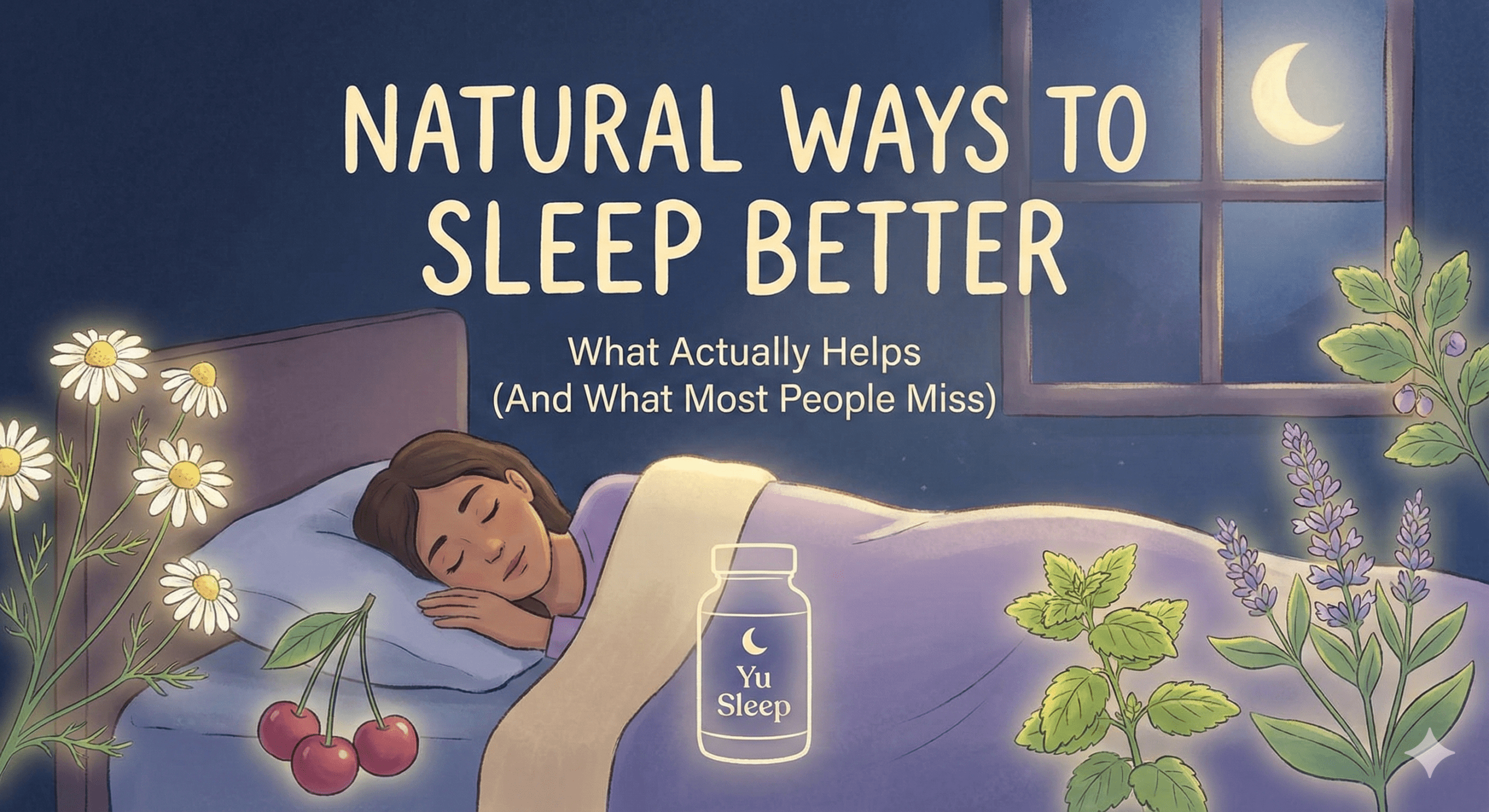
If you struggle to sleep through the night, you are definitely not alone.
Many adults lie awake at night asking the same questions:
- What can help me sleep?
- Why do I wake up in the middle of the night?
- What helps with staying asleep?
We have all been there. You fall asleep fine, but then—bam. You are wide awake at 2:00 or 3:00 AM. Your body is exhausted, but your mind decides it’s the perfect time to replay an awkward conversation from five years ago or stress about tomorrow’s to-do list.
It is frustrating. It is exhausting. And honestly, it feels like nothing works.
The good news? You aren’t “broken.” Sleep issues usually have clear biological causes—and small tweaks can make a massive difference.
Let’s break down why this is happening.
Why So Many People Struggle With Sleep Today
Sleep problems rarely come from one single issue. Most of the time, several factors stack up.
Common reasons people struggle to sleep include:
- Mental stress that carries into the night
- Screen use late in the evening
- Inconsistent sleep times
- Caffeine earlier in the day
- An overactive nervous system
- Trouble fully relaxing before bed
When your body stays alert late into the night, sleep becomes lighter and easier to interrupt.
This explains why so many people search for:
- insomnia help
- something to help me sleep
- things to help you stay asleep at night
Read More: How to Fall Asleep in 2 Minutes: The Military Method Explained
Why “Just Go to Bed Earlier” Doesn’t Work
Many people think sleep starts at bedtime. It doesn’t.
Sleep begins hours before you lie down.
If your evening stays busy, stressful, or screen-heavy, your body never fully shifts into rest mode. When that happens, your mind stays active—even when you feel tired.
That’s why sleep experts focus on how you wind down, not just when you go to bed.
Natural Ways to Help Improve Sleep
Before you jump to strong prescriptions or sleeping pills, it’s worth trying to support your body naturally.
Here are the habits that actually move the needle:
1. Slow Down the Evening Treat the hour before bed like a sacred ritual. Dim the lights. Avoid intense arguments or scary movies. Signal to your brain that the day is done.
2. The “Blue Light” Ban Screens trick your brain into thinking it’s still daytime. Try putting the phone away at least an hour before sleep. (I know it’s hard, but it works).
3. A Simple Wind-Down Routine You don’t need a complicated spa routine. Just reading a few pages of a book, journaling your thoughts, or taking a warm shower can physically drop your body temperature and signal rest.
4. The Consistency Hack Going to bed and waking up at the same time—even on weekends—trains your body to expect sleep.
What Helps With Staying Asleep at Night?
This is the big one. Many of us can fall asleep, but we can’t stay asleep.
This is usually a chemical issue. When your relaxation levels drop too low in the middle of the night, your brain releases cortisol (stress hormone) and wakes you up.
Because of this, many adults are now looking for natural ways to keep that relaxation going all night long.
- things to help you stay asleep
- what helps with staying asleep
- need help sleeping through the night

Natural Sleep Aids Many People Explore
Along with healthy habits, some people choose natural sleep aids to support their nighttime routine.
Common options include:
- Magnesium for sleep
- Herbal blends
- Amino acids linked to relaxation
- Plant-based sleep support formulas
These options don’t force sleep. Instead, they support calm and help the body settle more naturally.
Which Form of Magnesium Helps With Sleep?
Magnesium plays a huge role in relaxation, but not all magnesium is created equal.
If you’ve tried it and it didn’t work, you might have used the wrong kind. Many people swear by Magnesium Glycinate because it absorbs easily and supports calm without the harsh stomach side effects of other types.
A Gentle Option Many Adults Add to Their Night Routine
As more people look for natural sleep support, many explore Yu Sleep as part of their evening routine.
Yu Sleep is a plant-based nighttime support formula designed to help the body relax and support smoother sleep cycles.
It combines ingredients often used for nighttime calm, including:
- Magnesium glycinate
- Tart cherry
- L-theanine
- Lemon balm
- Apigenin
- 5-HTP
- B-vitamins
The idea isn’t to force you to sleep—it’s to help your body relax enough to do what it naturally knows how to do.
Many adults say it fits easily into their nighttime habits.
(Individual results may vary.)
Why People Choose a Gentle Sleep Support Instead of Strong Sleep Aids
Strong sleep medications can feel tempting when sleep feels broken.
But many people prefer gentler options because they:
- Feel more natural
- Work with the body, not against it
- Fit into long-term routines
- Avoid harsh next-day feelings
That’s why searches for natural sleep aids and natural remedies for deep sleep keep rising.
Simple Nighttime Routine That Supports Better Sleep
Here’s an example of a calming evening routine many adults follow:
- Reduce caffeine after early afternoon
- Dim lights after dinner
- Turn off screens one hour before bed
- Read or stretch lightly
- Use a gentle sleep support if desired
Small changes done consistently often bring better results than drastic fixes.
Final Thoughts
If you need help sleeping through the night, don’t beat yourself up.
Sleep problems are usually just a mismatch between our modern lifestyle and our ancient biology. When you support calm earlier in the evening and give your body the right nutrients, sleep often improves naturally.
Whether you try a new routine or explore gentle support like Yu Sleep, the most important thing is to start tonight. Your body will thank you tomorrow.

kztsqiuwrwiyrmhxvowojjeqmspqgw