
Many health problems don’t start with pain or clear symptoms. They develop quietly, often for years, before showing visible signs. This is where annual blood tests become important. They give early signals about what is happening inside the body—long before serious illness develops.
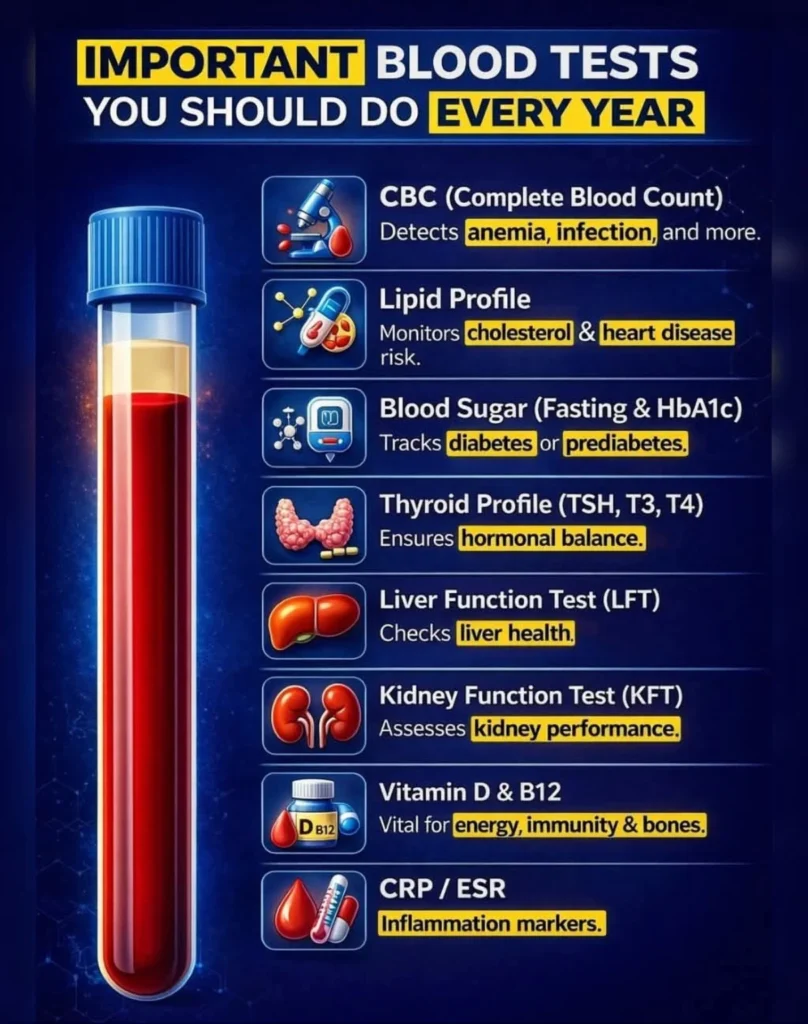
The image I shared highlights some of the most important blood tests you should do every year. This article explains each test in simple terms, why it matters, and how it helps protect long-term health. The goal is awareness, not fear.
Why Annual Blood Tests Matter
Blood carries information about almost every system in the body. Changes in blood values can reveal problems related to nutrition, metabolism, immunity, and organ function.
Regular blood tests help:
- Detect issues early
- Track existing conditions
- Prevent complications
- Support informed lifestyle changes
You don’t need to feel sick to get tested. In fact, testing while you feel well is often the most useful.
1. CBC (Complete Blood Count)
The Complete Blood Count (CBC) is one of the most basic yet powerful blood tests. It measures different components of blood, including red blood cells, white blood cells, and platelets.
What it helps detect:
- Anemia
- Infections
- Inflammation
- Blood-related disorders
Low energy, frequent infections, or unexplained weakness often show up in CBC results before symptoms become serious.
Why do it yearly:
It provides a general overview of your blood health and immune system.
Read More: Foods That Starve Parasites From Your Gut: What Science and Tradition Really Say
2. Lipid Profile
The Lipid Profile measures fats in the blood, including cholesterol and triglycerides. These values are closely linked to heart health.
What it tracks:
- Total cholesterol
- LDL (bad cholesterol)
- HDL (good cholesterol)
- Triglycerides
High cholesterol usually has no symptoms, but it increases the risk of heart disease and stroke over time.
Why do it yearly:
Early detection allows lifestyle changes before medication becomes necessary.
3. Blood Sugar Tests (Fasting & HbA1c)
Blood sugar tests help monitor how the body handles glucose.
Two important tests:
- Fasting Blood Sugar: Shows current glucose levels after fasting
- HbA1c: Shows average blood sugar over the last 2–3 months
What it detects:
- Prediabetes
- Type 2 diabetes
- Blood sugar control issues
Many people live with high blood sugar for years without knowing it.
Why do it yearly:
Early detection prevents complications affecting the heart, kidneys, eyes, and nerves.
4. Thyroid Profile (TSH, T3, T4)
The thyroid controls metabolism, energy levels, and hormone balance.
What it helps identify:
- Hypothyroidism (low thyroid)
- Hyperthyroidism (overactive thyroid)
- Hormonal imbalance
Symptoms like weight changes, fatigue, hair loss, or mood swings are often linked to thyroid function.
Why do it yearly:
Thyroid problems are common and manageable when detected early.
5. Liver Function Test (LFT)
The liver plays a key role in detoxifying the body, processing nutrients, and managing metabolism.
What LFT checks:
- Liver enzymes
- Protein levels
- Bilirubin
Abnormal results may indicate liver stress, fatty liver changes, or medication-related strain.
Why do it yearly:
Liver issues often develop silently, especially with processed foods or alcohol use.
6. Kidney Function Test (KFT)
The kidneys filter waste and balance fluids in the body.
What it measures:
- Creatinine
- Urea
- Electrolytes
Kidney problems may not cause symptoms until they are advanced.
Why do it yearly:
Early detection helps prevent long-term kidney damage and supports hydration and diet adjustments.
7. Vitamin D and Vitamin B12
Vitamin deficiencies are very common and often overlooked.
Vitamin D supports:
- Bone health
- Immunity
- Muscle function
Vitamin B12 supports:
- Energy levels
- Brain function
- Red blood cell production
Deficiencies can cause fatigue, weakness, mood changes, and bone discomfort.
Why do it yearly:
Modern lifestyles often limit sunlight exposure and nutrient intake.
Read More: Avoid These Daily Habits Before It’s Too Late: How Small Choices Affect Your Health
8. CRP and ESR (Inflammation Markers)
CRP (C-reactive protein) and ESR measure inflammation in the body.
What they indicate:
- Chronic inflammation
- Infection risk
- Autoimmune activity
High inflammation increases the risk of heart disease and metabolic disorders.
Why do it yearly:
Inflammation often exists without pain and signals deeper health imbalances.
How to Use Blood Test Results Wisely
Blood tests are tools—not diagnoses by themselves.
Best practices:
- Compare results year-to-year
- Discuss changes with a healthcare professional
- Avoid panic over small variations
- Focus on long-term patterns
Lifestyle changes often improve results naturally over time.
Who Should Be Extra Careful With Annual Tests?
You should be especially consistent if you:
- Have a family history of diabetes or heart disease
- Feel persistent fatigue
- Have high stress levels
- Take long-term medication
- Follow a restrictive diet
Testing helps personalize your health decisions.
FAQ
Q: What are the most important blood tests to do every year?
The most important blood tests every year include CBC, lipid profile, blood sugar (fasting and HbA1c), thyroid profile, liver function test, kidney function test, vitamin D and B12, and inflammation markers like CRP or ESR.
Q: Why is a CBC blood test done annually?
A CBC blood test helps detect anemia, infections, inflammation, and immune system changes early, even before symptoms appear.
Q: How often should cholesterol and lipid profile tests be done?
A lipid profile should be done at least once a year, especially for adults, to monitor cholesterol levels and assess heart disease risk.
Q: What is the difference between fasting blood sugar and HbA1c?
Fasting blood sugar shows your current glucose level, while HbA1c reflects average blood sugar over the past 2–3 months. Both are important for diabetes screening.
Q: Who should get thyroid, liver, and kidney tests every year?
People with fatigue, weight changes, hormonal symptoms, family history of disease, or long-term medication use should include thyroid, liver, and kidney function tests in their annual health checkup.
Q: Why are vitamin D and B12 tests important?
Vitamin D and B12 deficiencies are common and can cause fatigue, weak immunity, bone pain, and nerve issues. Annual testing helps maintain proper levels.
Q: What do CRP and ESR blood tests indicate?
CRP and ESR are inflammation markers. High levels may indicate chronic inflammation, infection, or increased risk of heart and metabolic diseases.
Final Thoughts
Annual blood tests are not about finding problems—they are about preventing them. They offer clarity, direction, and peace of mind. When combined with healthy habits, they become one of the most effective tools for long-term wellness.
Listening to your blood early can save years of health complications later.
Health Disclaimer
The information provided in this article is for educational and informational purposes only and is not intended as medical advice, diagnosis, or treatment. Blood test results can vary based on individual health conditions, age, lifestyle, and medications.
Always consult a qualified healthcare professional before making medical decisions, starting or stopping medications, or interpreting blood test results. Do not ignore professional medical advice or delay seeking care based on information from this website.
Regular health checkups should be personalized based on individual needs and medical history. This content is not a substitute for professional medical consultation.










-
-
-
-
-
-
-
Show Comments看不懂但大受震撼
wish you all the best
wish you best and best
色即是空,空即是色
Wish you happiness
Every day is a new beginning
Hahahaha You are so good