
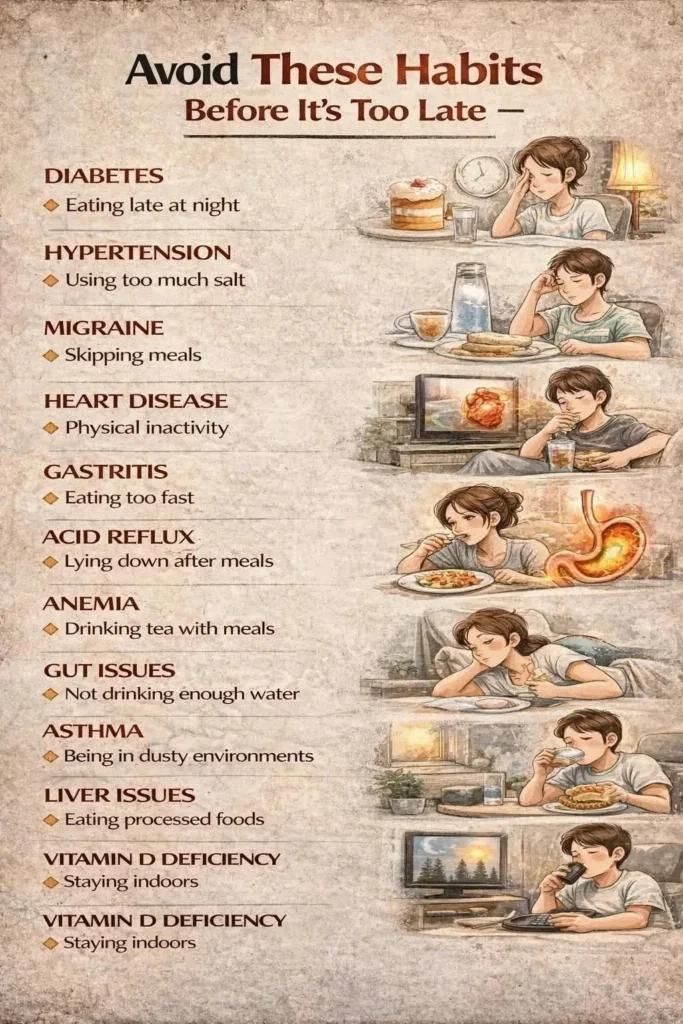
Many health problems don’t start suddenly. They develop quietly, shaped by daily habits we often ignore. The image you shared highlights common lifestyle patterns that may seem harmless at first but can slowly increase the risk of serious health issues.
This article explains why these habits matter, how they affect the body, and what small changes can help protect long-term health. The goal is not fear—but awareness and prevention.
Read More: Foods That Starve Parasites From Your Gut: What Science and Tradition Really Say
1. Eating Late at Night and Diabetes Risk
Eating late at night disrupts the body’s natural metabolic rhythm. At night, insulin sensitivity decreases, meaning the body struggles to process glucose efficiently.
Why this matters:
- Blood sugar levels stay elevated longer
- Increased insulin resistance over time
- Higher risk of weight gain and type 2 diabetes
What helps:
Try to finish dinner at least 2–3 hours before sleep. If hungry, choose a light, protein-based snack instead of heavy or sugary foods.
2. Too Much Salt and High Blood Pressure
Salt is essential, but excess sodium causes the body to retain water, increasing pressure inside blood vessels.
Health effects:
- Elevated blood pressure (hypertension)
- Increased strain on the heart
- Higher risk of stroke and kidney issues
What helps:
Reduce processed foods, taste before adding salt, and use herbs or spices for flavor instead.
3. Skipping Meals and Migraines
Skipping meals causes blood sugar levels to drop suddenly, which can trigger headaches or migraines in many people.
Why migraines worsen:
- Brain relies on steady glucose supply
- Hunger increases stress hormones
- Dehydration often follows skipped meals
What helps:
Eat regular, balanced meals with protein, fiber, and healthy fats to stabilize blood sugar.
4. Physical Inactivity and Heart Disease
A sedentary lifestyle is one of the strongest contributors to heart disease. Lack of movement slows circulation and weakens heart muscles.
Long-term risks:
- Poor cholesterol balance
- Reduced oxygen delivery
- Increased inflammation
What helps:
Even 20–30 minutes of daily walking improves heart health. Movement matters more than intensity.
5. Eating Too Fast and Gastritis
Fast eating overwhelms the stomach, increasing acid production and irritation of the stomach lining.
Common symptoms:
- Bloating
- Stomach pain
- Acid discomfort
What helps:
Eat slowly, chew thoroughly, and avoid distractions like screens during meals.
6. Lying Down After Meals and Acid Reflux
When you lie down right after eating, stomach acid can move upward into the esophagus.
Why reflux worsens:
- Gravity no longer helps digestion
- Acid irritates the esophageal lining
- Sleep quality decreases
What helps:
Remain upright for at least 30–60 minutes after meals. Light walking helps digestion.
7. Drinking Tea With Meals and Anemia
Tea contains tannins that reduce iron absorption from food—especially plant-based iron.
Why this matters:
- Lower iron absorption
- Increased risk of anemia
- Fatigue and weakness
What helps:
Drink tea at least 1 hour after meals, not during.
8. Not Drinking Enough Water and Gut Issues
Water supports digestion, stool movement, and gut bacteria balance.
Dehydration can cause:
- Constipation
- Poor nutrient absorption
- Digestive discomfort
What helps:
Sip water throughout the day, not just when thirsty.
9. Dusty Environments and Asthma Triggers
Dust contains allergens that irritate airways, especially in people with asthma or allergies.
Health impact:
- Increased inflammation
- Breathing difficulty
- Frequent flare-ups
What helps:
Keep living spaces clean, ventilated, and reduce exposure where possible.
Read More: Understanding the Link Between Oral Hygiene and Heart Health
10. Processed Foods and Liver Health
Highly processed foods are often high in sugar, unhealthy fats, and additives.
How the liver suffers:
- Increased fat accumulation
- Inflammation
- Higher risk of fatty liver disease
What helps:
Choose whole foods—vegetables, fruits, whole grains, and lean proteins.
11. Staying Indoors and Vitamin D Deficiency
Vitamin D is essential for bones, immunity, and mood. Limited sunlight exposure reduces natural vitamin D production.
Signs of deficiency:
- Bone pain
- Low immunity
- Fatigue and low mood
What helps:
Spend 15–30 minutes outdoors daily when possible. Supplements may be needed under medical advice.
Why These Habits Matter Together
One habit alone may not cause illness, but combined over time, they significantly increase health risks. Prevention starts with awareness.
Key takeaway:
- Health is shaped by daily routines
- Small changes create long-term protection
- Consistency matters more than perfection
FAQ
Q: Can small daily habits really cause serious health problems?
Yes. Small habits repeated daily can slowly affect blood sugar, digestion, heart health, and immunity. Over time, these patterns increase the risk of chronic conditions.
Q: Is eating late at night always unhealthy?
Occasional late meals are not harmful, but eating heavy or sugary foods late at night regularly can disrupt metabolism and increase diabetes risk.
Q: How much salt is too much for daily health?
Most health guidelines recommend limiting salt intake to avoid high blood pressure. Excess salt often comes from processed foods rather than home cooking.
Q: Why does skipping meals trigger headaches or migraines?
Skipping meals causes blood sugar drops and stress hormone release, which can trigger headaches and migraines in many people.
Q: Can lifestyle changes really prevent these conditions?
Yes. Regular meals, physical activity, hydration, stress management, and mindful eating significantly reduce the risk of many lifestyle-related health problems.
Final Thoughts
The habits shown in the image are common—and that’s exactly why they’re dangerous. They don’t feel harmful in the moment, but their effects accumulate silently.
Improving health doesn’t require extreme measures. Simple changes—eating on time, moving daily, drinking water, and being mindful—can protect the body for years to come.
Your future health depends on what you do today.