
Gut health has become a major topic in wellness—and for good reason. The digestive system affects immunity, energy, skin health, and even mood. One area that often sparks curiosity (and concern) is intestinal parasites. While parasites are more common in areas with poor sanitation, digestive imbalances can happen anywhere. This has led many people to explore foods that starve parasites from the gut as part of a supportive, gut-friendly diet.
This article explains what these foods are, how they may help, and—most importantly—what science and traditional knowledge actually support. The goal is education, not fear or medical replacement.
Understanding Parasites and Gut Health
Parasites are organisms that live in or on a host and draw nutrients from it. Some intestinal parasites can cause symptoms like bloating, fatigue, diarrhea, nutrient deficiencies, or unexplained digestive discomfort. However, not all gut issues mean parasites, and diagnosis always requires medical testing.
Certain foods have been traditionally used to create an unfriendly environment for parasites, support digestion, and strengthen the gut’s natural defenses. These foods do not replace medical treatment, but they may support overall digestive balance.
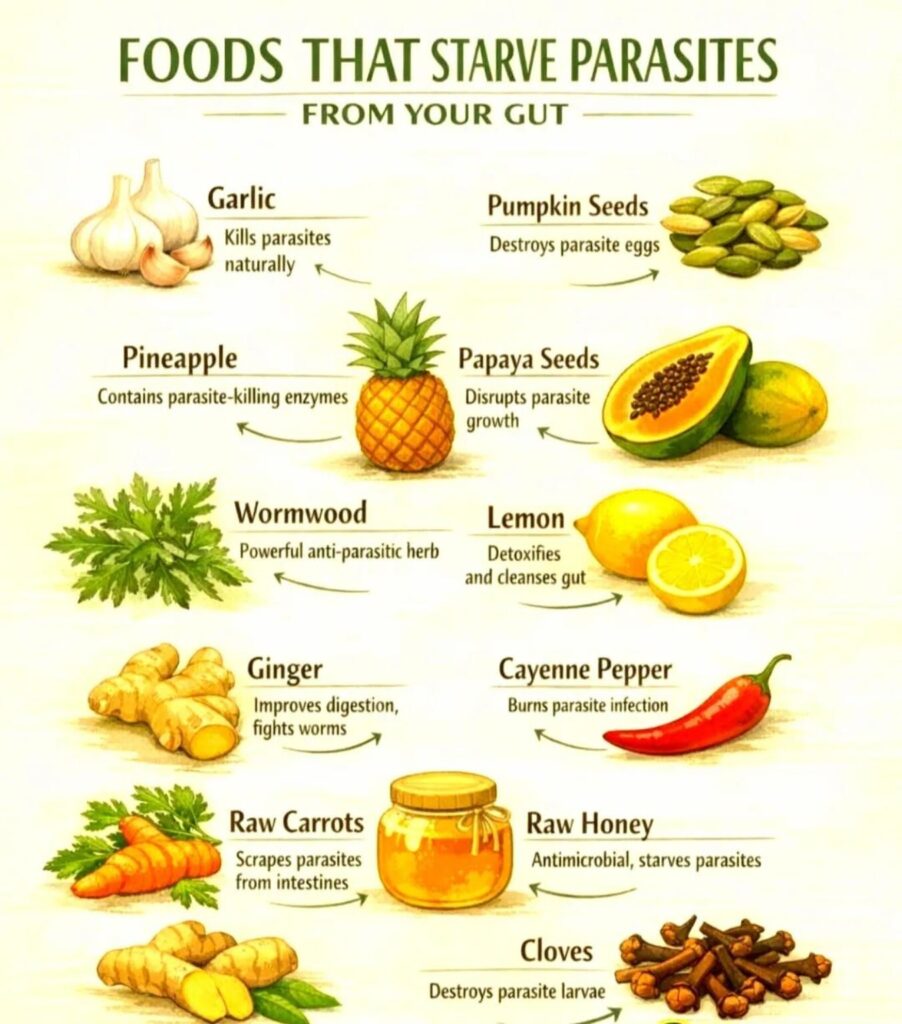
Garlic: Nature’s Most Studied Antimicrobial
Garlic has been used for centuries in traditional medicine. It contains allicin, a sulfur-based compound known for antimicrobial properties.
How garlic may support gut health:
- Helps control harmful bacteria
- Supports immune function
- May interfere with parasite survival mechanisms
Garlic does not “kill parasites overnight,” but regular dietary inclusion may help create an environment that discourages their growth.
Pumpkin Seeds: Traditionally Linked to Parasite Control
Pumpkin seeds contain compounds called cucurbitacins, which have been studied for their role in parasite management.
Potential benefits:
- May affect parasite mobility
- Supports digestive motility
- High in zinc, supporting immune health
Pumpkin seeds are commonly used in traditional parasite protocols, especially when combined with a fiber-rich diet.
Papaya Seeds: Enzymes That Support Digestion
Papaya seeds are rich in papain, a digestive enzyme that helps break down proteins.
Why papaya seeds matter:
- Support digestion
- May disrupt parasite attachment
- Help maintain gut balance
They are often consumed in small amounts and should not be overused.
Pineapple: Digestive Enzymes at Work
Pineapple contains bromelain, another enzyme known for digestive and anti-inflammatory effects.
Gut-supporting roles:
- Helps break down proteins
- Supports nutrient absorption
- May weaken parasite biofilms
Pineapple works best as part of a balanced diet, not as a standalone remedy.
Ginger: A Digestive System Ally
Ginger is well-known for easing nausea and supporting digestion.
How ginger supports gut health:
- Improves gut motility
- Reduces inflammation
- Helps the body naturally expel unwanted organisms
Healthy digestion is one of the most important defenses against gut imbalance.
Cloves: Strong Antimicrobial Properties
Cloves contain eugenol, a compound studied for antimicrobial effects.
Traditional uses include:
- Supporting gut cleansing
- Discouraging parasite reproduction
- Helping reduce microbial overgrowth
Cloves are powerful and best used in small culinary amounts.
Read More: Smoothies for Weight Loss: Healthy Smoothies and Meal Replacement Shakes Explained
Wormwood: A Potent Herbal Tradition (Use with Caution)
Wormwood has a long history in herbal medicine, especially in parasite-related traditions.
Important notes:
- Strong herb with potential side effects
- Not recommended for long-term or unsupervised use
- Should only be used under professional guidance
This is not a casual food but a medicinal herb.
Lemon: Supporting the Gut Environment
Lemon supports digestion by stimulating stomach acid and bile production.
Benefits include:
- Supporting detox pathways
- Improving digestion
- Helping maintain gut pH balance
A healthy digestive environment makes parasite survival more difficult.
Raw Carrots: Gentle Gut Cleaners
Raw carrots are rich in fiber, which supports regular bowel movements.
How fiber helps:
- Physically helps move waste through the intestines
- Reduces toxin buildup
- Supports healthy gut bacteria
Fiber doesn’t kill parasites but helps remove what doesn’t belong.
Raw Honey: Antimicrobial but Not a Cure
Raw honey has natural antimicrobial properties.
Benefits:
- Supports beneficial gut bacteria
- Helps soothe digestion
- May discourage harmful microbes
Moderation is important due to natural sugars.
Cayenne Pepper: Supporting Circulation and Digestion
Cayenne improves blood flow and digestive enzyme activity.
Gut-related effects:
- Enhances digestion
- Supports immune response
- May help discourage parasite survival
Not suitable for sensitive digestive systems.
Read More: Effective Ways to Remove Plaque and Tartar at Home
Do These Foods “Kill” Parasites?
Here’s the truth—food alone does not replace medical treatment for confirmed parasitic infections. However, these foods may:
- Support digestive health
- Strengthen immune defenses
- Create conditions less favorable for parasites
- Improve nutrient absorption
They are best used as preventive and supportive dietary choices, not cures.
Supporting Gut Health Beyond Food
For long-term gut balance:
- Eat a fiber-rich diet
- Stay hydrated
- Manage stress
- Avoid excessive sugar
- Practice food safety and hygiene
- Seek medical advice when symptoms persist
Scientific and Safety Perspective
- No food guarantees parasite elimination
- Clinical diagnosis is essential
- Traditional foods may support gut resilience
- Herbs like wormwood require supervision
- Balanced nutrition always matters more than extremes
FAQ
Q: Can foods really starve parasites from the gut?
Some foods may help create an environment that is less supportive of parasite survival by improving digestion, immune function, and gut balance. However, food alone cannot replace medical treatment for confirmed паразitic infections.
Q: Which foods are most commonly linked to parasite control?
Garlic, pumpkin seeds, papaya seeds, ginger, cloves, and fiber-rich foods are traditionally associated with gut cleansing and microbial balance. These foods support digestive health rather than acting as direct cures.
Q: Are these foods safe to consume daily?
Most foods listed, such as garlic, ginger, carrots, and pumpkin seeds, are safe when eaten in normal dietary amounts. Strong herbs like wormwood should only be used under professional guidance.
Q: How do I know if my gut symptoms are caused by parasites?
Symptoms like bloating, fatigue, or digestive discomfort can have many causes. Only medical testing can confirm a parasitic infection, so persistent symptoms should be evaluated by a healthcare professional.
Q: Can a parasite-supporting diet help prevent future gut issues?
Yes. A diet rich in fiber, whole foods, and digestion-supporting ingredients may help maintain gut health and reduce the risk of imbalances. Good hygiene and food safety are equally important for prevention.
Final Thoughts
Foods that are traditionally said to “starve parasites” are better understood as gut-supporting, immune-strengthening foods. Garlic, pumpkin seeds, papaya seeds, ginger, and cloves have historical and scientific value—but they work best as part of a healthy lifestyle, not as quick fixes.
If digestive symptoms persist, professional medical evaluation is essential.